

When most people think about Hajj, they think about the pilgrims.
They see the white garments of Ihram, the emotional circumambulation of the Ka’abah, the standing at Arafat, the stoning of the Jamarat and the tears of supplication at the Holy Mosque.
What they rarely see are the hundreds of people working quietly behind the scenes to make those acts of worship easier, safer and more meaningful.
As I continue this series of reflections from the Holy Land, one fact has become increasingly clear to me: performing Hajj today, particularly under the auspices of the Katsina State Government, is much more than the individual pilgrim paying his fare and travelling to Saudi Arabia.
Behind every pilgrim stands a huge support system funded largely by the government at enormous cost.
Many people may not know that out of the 2,035 pilgrims who performed this year’s Hajj from Katsina State, about 240 individuals were sponsored specifically to support the operation and make life easier for the pilgrims.
These are not pilgrims who came merely to perform Hajj.
They are the people who work around the clock so that others can perform Hajj with fewer difficulties.
Among them are doctors, nurses and pharmacists who provide medical care to pilgrims. There are Islamic scholars and preachers drawn from all the 34 local government areas of the state to guide pilgrims through the complicated rituals of Hajj and answer religious questions.
There are guides whose responsibility is to lead pilgrims through the maze-like streets of Makkah, Mina, Arafat and Muzdalifah.
There are loaders who handle luggage and assist pilgrims during movement from one location to another.
There are media personnel, journalists and social media officers who keep the government and families back home informed about developments in the Holy Land.
In addition to these support staff, there is the Amirul Hajj and his delegation.
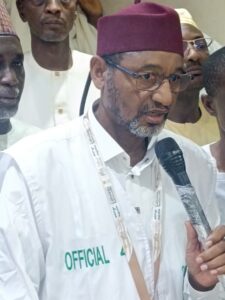
This year, the delegation led by Barrister Ahmad Usman El-Marzuq comprised representatives from virtually every key stakeholder group in Katsina State. The delegation included representatives of the Executive arm of government, the Legislature, the Judiciary, members of the State Executive Council, representatives of the Katsina and Daura Emirate Councils, respected Islamic scholars (Ulama), and media representatives.
The delegation was specifically constituted by Governor Dikko Umaru Radda to provide oversight, monitor the welfare of pilgrims, resolve challenges as they arose and ensure that government policies and directives were faithfully implemented throughout the pilgrimage.
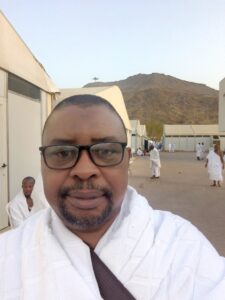
Among the delegation members was Malam Ahmed Abdulkadir, Chairman of the Katsina State Radio and Television Services, who served as the Media Representative, coordinating and overseeing media activities and ensuring accurate reportage of Katsina pilgrims’ activities both in Nigeria and in the Holy Land.
Another important layer of oversight came from members of the Katsina State House of Assembly, particularly those serving on committees responsible for matters relating to Hajj administration and pilgrims’ welfare. Their presence was intended to ensure transparency, accountability and effective monitoring of the entire operation.
Then comes another layer of supervision: the Katsina State Pilgrims Welfare Board itself.
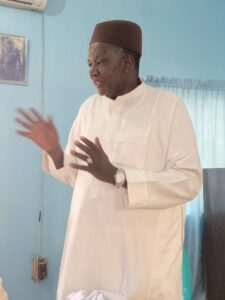
The Board, under the leadership of its Chairman, Alhaji Kabir Bature, and the Executive Director, Alhaji Yunusa Abdullahi Dankama, together with board members, directors, management staff and operational personnel, shoulders the enormous responsibility of planning and executing every aspect of the pilgrimage.
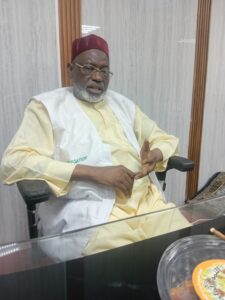
From the screening and documentation of intending pilgrims in Katsina to accommodation arrangements in Makkah and Madinah, transportation logistics, feeding, medical support and welfare services, the Board remains at the centre of the entire operation.
When one begins to add up the cost of air tickets, accommodation, feeding, transportation, medical services, logistics, allowances and administrative support for hundreds of officials, one begins to appreciate the millions of naira spent every year by the Katsina State Government to subsidize the pilgrimage.
And this year’s support went even further.
Governor Dikko Umaru Radda paid for the Hadaya (sacrificial animal) on behalf of all Katsina pilgrims.
He also approved a Sallah gift of 300 Saudi Riyals for each pilgrim during the Eid period.
Earlier, the government intervened financially to ensure that Katsina State did not lose its Hajj allocation when payment deadlines approached, committing billions of naira to secure the state’s quota until pilgrims completed their payments.
These interventions are often overlooked because they happen behind the scenes.
Yet they represent a substantial investment aimed at ensuring that pilgrims can focus on worship rather than worry about logistical difficulties.
However, as with every large-scale operation involving thousands of people, challenges remain.
Some of these challenges became apparent during our meetings before departing for Saudi Arabia.
One recurring complaint concerned the selection of certain categories of support personnel, particularly guides and loaders.
There have been allegations that in some cases, political influence and personal relationships creep into the process.
Instead of selecting the most qualified and hardworking individuals, some local government officials are said to nominate relatives, friends and even spouses under the categories of guides or loaders.
Once they arrive in Saudi Arabia, some of these individuals reportedly fail to perform the duties for which they were selected, relying instead on their connections to avoid accountability.
This creates additional burdens for the few dedicated personnel who are genuinely working.
Another concern relates to the quality of some of the religious guides and preachers.
Hajj is one of the most complex acts of worship in Islam.
Pilgrims depend heavily on scholars and preachers to understand the rites correctly and avoid mistakes that could affect the validity of their pilgrimage.
Unfortunately, there have been cases where some preachers lacked sufficient grounding in the rituals and jurisprudence of Hajj, leading to confusion among pilgrims rather than providing clarity.
This is an area that deserves urgent attention.
The purpose of sponsoring preachers is not merely to fill quotas but to ensure that pilgrims receive accurate religious guidance.
A preacher who is inadequately prepared can inadvertently create more problems than he solves.
These are difficult conversations, but they are necessary.
The millions of naira invested by the government each year come from public funds.
Taxpayers deserve to know that those resources are being utilized efficiently and that every person sponsored to support the Hajj operation is contributing meaningfully to the welfare of pilgrims.
The overwhelming majority of officials, medical personnel, preachers, guides, volunteers and supervisors work tirelessly and make tremendous sacrifices.
Many sleep little, walk long distances, miss opportunities for their own voluntary acts of worship and spend most of their time solving problems for others.
Their contributions deserve recognition.
At the same time, the few weaknesses in the system should not be ignored.
Rather, they should serve as opportunities for improvement.
If the selection process becomes more transparent, merit-based and accountable, the benefits will be felt by every pilgrim.
As our Hajj journey gradually draws to a close, one lesson stands out above all others: a successful pilgrimage is not achieved by pilgrims alone.
It is the result of months of planning, the dedication of hundreds of support personnel, the oversight of government institutions, the commitment of traditional and religious leaders, and the willingness of government to commit substantial resources to the welfare of its citizens.
The pilgrims may be the visible face of Hajj.
But behind every successful pilgrim stands an army of unsung men and women whose efforts often go unnoticed.
They, too, deserve our appreciation—and our prayers.