
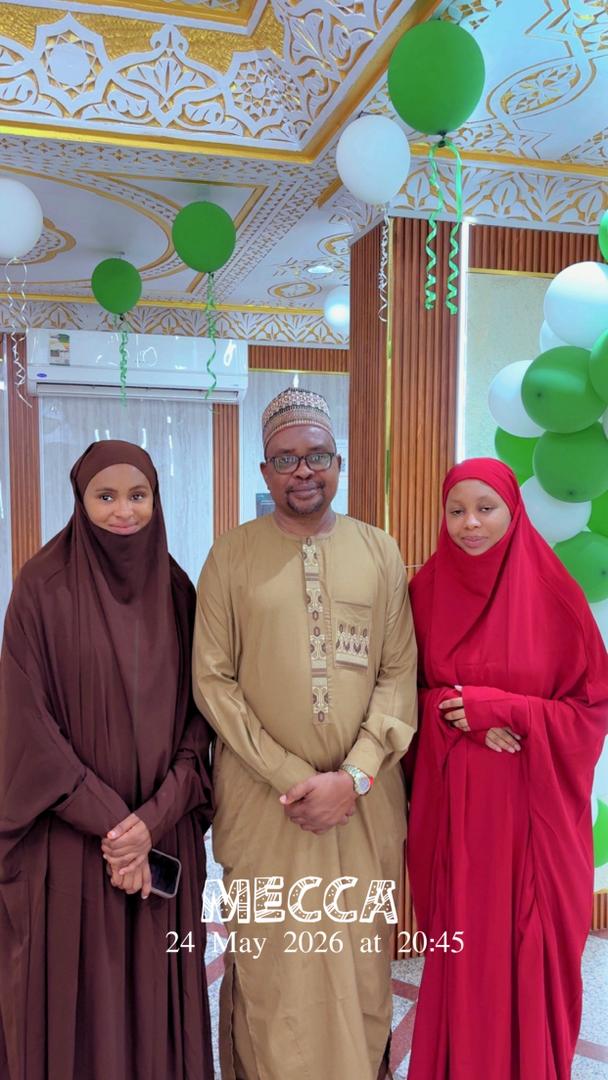

One of the enduring lessons of Hajj is that the pilgrimage is not only a test of faith, patience and devotion; it is also a test of physical endurance.
Throughout this series, I have written about the spiritual highs of the journey — the serenity of Madinah, the awe of standing before the Ka’abah, the challenges of Mina, the solemnity of Arafat, and the emotional completion of the Hajj rites. Yet there is another side to the pilgrimage that many people rarely talk about: the toll it takes on the human body.
After the major rituals were over, fatigue began to catch up with many pilgrims.
Days of walking under the scorching Arabian sun, interrupted sleep, crowded conditions and the emotional intensity of the pilgrimage inevitably left many exhausted. It was during this period that my family experienced one of the most frightening moments of our Hajj journey.
The first warning sign came while we were still in Mina.
I was returning from the second stoning ritual at Jamarat after completing a round trip of nearly ten kilometres on foot. My clothes were soaked with sweat and every step felt heavier than the last.
As I trudged back towards our camp, two young girls from Katsina who recognized me approached hurriedly.
Their faces immediately made me uneasy.
They informed me that my daughter, Mubina, had collapsed and fainted while walking due to exhaustion.
For a moment, my heart skipped a beat.
Thankfully, they quickly reassured me that she had already regained consciousness after resting for a while and had resumed the journey.
I thanked Allah and continued on my way, believing the worst was behind us.
I was wrong.
Several days after the completion of the Hajj rituals, another incident occurred — this time involving my other daughter, Halima.
Since our return from Mina, Halima had not been in the best of health. She had developed a cold that aggravated her asthma. She was also suffering from persistent coughing, an eye ailment, general fatigue and the accumulated exhaustion of the pilgrimage.
That evening, after Asr prayer, I was seated outside our hotel in Makkah.
Pilgrims were moving about leisurely, buying gifts and personal items from nearby shops as the city gradually settled into its evening rhythm. I was enjoying a rare moment of relaxation when my phone rang.
It was Mubina.
Her voice was calm, but I sensed immediately that something was wrong.
She informed me that Halima had fallen and fainted.
They were at the temporary pilgrims’ clinic established on the first floor of our hotel.
I rushed there immediately.
When I arrived, the clinic staff had already decided that her condition required further medical evaluation and referred her to a larger hospital.
Only later, after she had recovered, did Halima explain what had happened.
She said she was walking towards her room when a cleaner hurried past carrying a mop attached to a long handle. In his haste, the handle accidentally struck her on the head.
The cleaner immediately apologized profusely.
Although she was dazed and in pain, she managed to continue to her room. Moments after arriving, however, she collapsed and lost consciousness.
At the time, neither she nor anyone around her fully appreciated the seriousness of the incident.
Within minutes, an ambulance arrived.
Together with Mubina and the doctor attached to our pilgrims’ clinic, we accompanied her for further treatment.
Our first destination was a hospital that carried out preliminary assessments. However, because certain tests could not be performed there, she was referred onward to another facility.
That was how we arrived at Heraa General Hospital.
For many pilgrims, the name may be unfamiliar.
Yet Heraa is one of the major government hospitals serving Makkah. Operating under the Saudi Ministry of Health and the Makkah Health Cluster, it serves both residents and the millions of pilgrims who visit the holy city every year.
The hospital functions as a major referral centre and provides emergency services, specialist medical care, surgery, maternity services and inpatient treatment. With hundreds of beds and a large team of doctors and healthcare professionals, it plays a crucial role during the Hajj season when medical demand rises dramatically.
Because of its strategic location, Heraa Hospital is among the institutions that operate around the clock to care for pilgrims requiring emergency and specialized treatment.
Upon arrival, I discovered another aspect of the Saudi healthcare system.
Only one family member was permitted to accompany the patient.
Consequently, our clinic doctor and I handed Halima over to the hospital staff while Mubina remained with her.
Reluctantly, I left.
Waiting was difficult.
As every parent knows, few things are more painful than being unable to remain beside your child when she is receiving medical care.
Yet my anxiety was eased by the professionalism of the hospital staff.
The moment she was admitted, doctors and nurses swung into action.
Tests were conducted promptly.
Medical personnel monitored her condition closely.
Throughout the process, the treatment was efficient, orderly and reassuring.
By sunset, the good news arrived.
Halima had regained her strength.
Although still weak and requiring rest, she was stable enough to be discharged.
Then came another surprise.
Having experienced hospital care in different parts of the world, I braced myself for what I assumed would be a substantial medical bill.
After all, emergency transportation, specialist consultations and multiple medical tests could not possibly be cheap.
Or so I thought.
Instead, I was informed that there was absolutely nothing to pay.
Not a single riyal.
The treatment was provided free of charge.
The ambulance service was free.
The consultations were free.
The tests were free.
Everything was free.
As if that was not enough, the hospital arranged transportation for Halima and Mubina back to the hotel through the extensive Hajj transportation support system established by Saudi authorities for pilgrims.
Throughout the Hajj season, fleets of ambulances and support vehicles operate continuously between hospitals, clinics, holy sites and pilgrim accommodations. Their purpose is simple: to ensure that no pilgrim is denied access to medical care because of transportation difficulties.
It was a remarkable demonstration of organization and compassion.
That evening, as I watched my daughter return safely to the hotel, tired but smiling again, I reflected on how quickly joy can turn into fear — and how quickly fear can be replaced by gratitude.
Hajj teaches many lessons.
Sometimes those lessons come during Tawaf around the Ka’abah.
Sometimes they come while standing in prayer at Arafat.
And sometimes they come while sitting anxiously outside a hospital waiting for news about a loved one.
For me, that day in Makkah became a powerful reminder that beyond the crowds, the rituals and the physical challenges, Hajj is also about humanity — strangers helping strangers, doctors serving patients they may never see again, and systems built to care for millions of guests who have come seeking the pleasure of Allah.
As I thanked Allah for Halima’s recovery, I also found myself deeply appreciative of the countless healthcare workers, ambulance crews and support personnel whose quiet service often goes unnoticed.
Their work may not form part of the formal rites of Hajj.
But for pilgrims like us, it can mean the difference between despair and relief, between fear and hope.
And on that day in Makkah, it certainly did.