
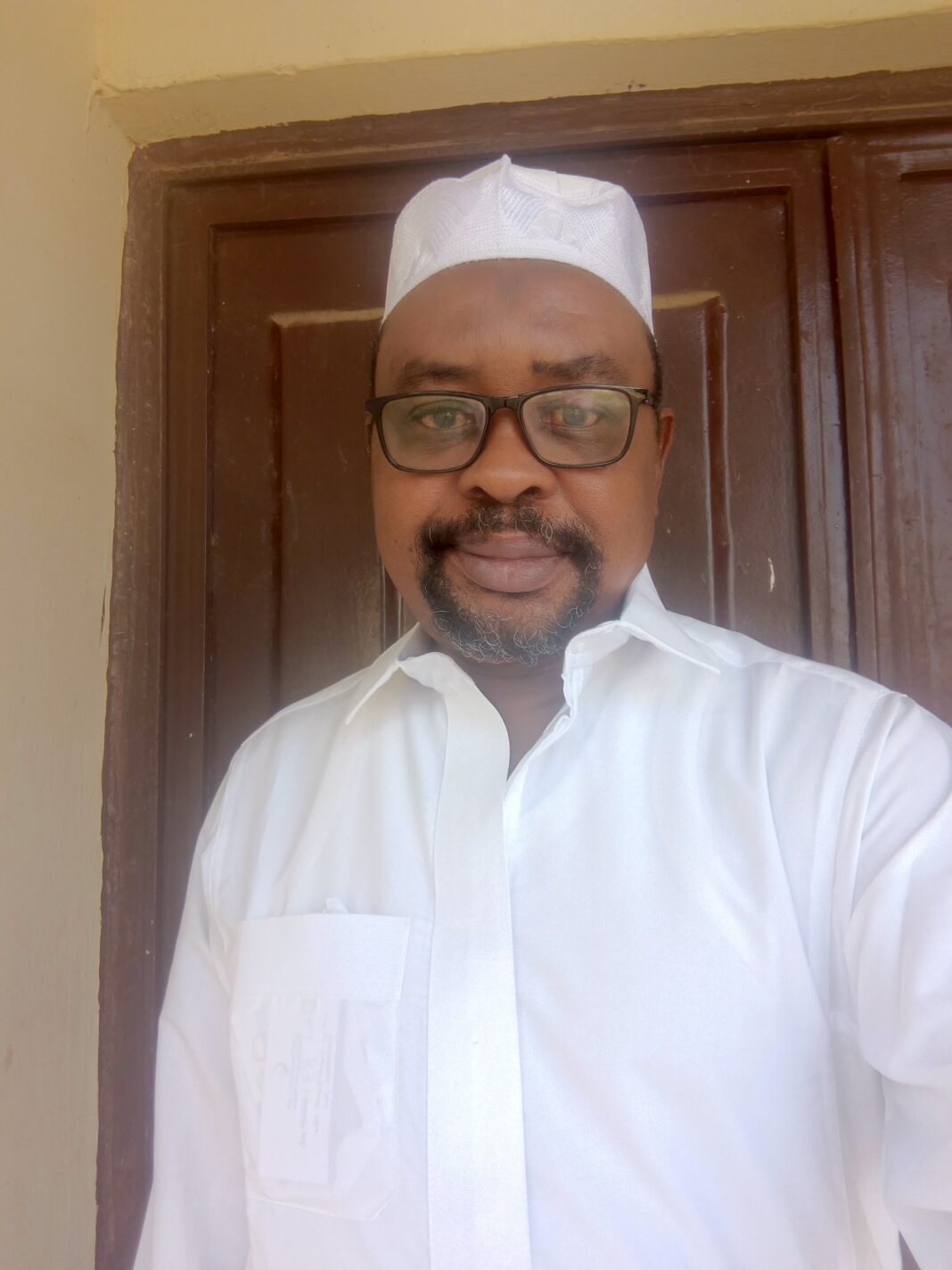

By Ahmed Abdulkadir
Every journey, no matter how memorable, must eventually come to an end. For every pilgrim, the final act before leaving Makkah is one of the most emotional moments of the entire Hajj experience—the Farewell Tawaf (Tawaf al-Wada’).
It is the last physical connection with the Sacred House before returning home. After days of prayers, supplications, sacrifices, and spiritual reflection, one finally walks around the Ka’abah one last time, knowing it may be the final opportunity in a lifetime.
For me, reaching that point was itself a blessing.
As I recounted in my previous article, I had been battling two ailments throughout my stay in Makkah. The first was the painful intertrigo—thigh chafing—that made walking extremely difficult. The second was a severe cold that developed into persistent coughing, chest pains, and fever.
The combined effect of both illnesses prevented me from visiting Masjid al-Haram after we returned from Mina following the completion of the stoning rituals.
Fortunately, I had earlier learnt from one of the scholars who delivered daily sermons at our hotel that it fell within the Haram boundary. Consequently, prayers offered in the hotel’s mosque carried the same multiplied reward as prayers performed inside Masjid al-Haram itself. That reassurance enabled me to remain within the hotel premises while recovering.
There was another practical consideration.
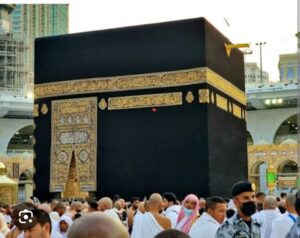
The distance from our hotel to Masjid al-Haram was considerable. The return journey covered about 5.2 kilometres. Hiring a taxi alone could cost as much as 50 Saudi Riyals for a single trip. Even then, there was no guarantee that one would be dropped off anywhere near the mosque, as the authorities constantly altered pedestrian and vehicular routes to ease congestion.
It was therefore possible to enter through one gate and emerge through another entirely different exit after prayers, forcing pilgrims to walk much longer distances than anticipated. For someone still nursing painful thighs and persistent coughing, that was hardly encouraging.
Another factor discouraged many pilgrims.
By that stage of Hajj, those performing Umrah were allowed to perform Tawaf on the ground level close to the Ka’abah. Pilgrims undertaking voluntary Tawaf or the Farewell Tawaf, however, were generally directed to the upper floors. That route is considerably longer, requiring several kilometres of walking.
So I waited.
Our waiting was prolonged by the uncertainty surrounding our return flight.
After several rounds of disagreements and negotiations between officials of Max Air and members of the Katsina State Hajj Delegation led by the Amirul Hajj, Barrister Ahmad Usman El-Marzuq, our departure date kept changing. Flight schedules were shifted repeatedly until, eventually, an undertaking was reportedly signed to forestall further postponements.
Finally, the last flight was fixed for Saturday, June 20, 2026.
Consequently, all officials and pilgrims on that flight were advised to perform their Farewell Tawaf on Friday, June 19.
Before proceeding further, it may be useful to explain the significance of this final rite.
The Farewell Tawaf is performed after a pilgrim has completed virtually all Hajj rites and is about to depart Makkah. It consists of seven circuits around the Holy Ka’abah, just like the Arrival Tawaf and the Tawaf al-Ifadah.
According to the majority of Islamic scholars, the Farewell Tawaf is obligatory (wajib) for pilgrims leaving Makkah. It is based on the instruction of the Prophet Muhammad (peace be upon him) that pilgrims should make their last act before departure the circumambulation of the House of Allah.
However, there are recognised exemptions. Women experiencing menstruation or post-natal bleeding are excused from performing it. Their Hajj remains valid without any penalty.
For others, deliberately abandoning the Farewell Tawaf does not invalidate the Hajj itself because it is not one of the pillars (arkan) of Hajj. Nevertheless, according to the majority of jurists, one who deliberately omits it without a valid excuse is required to offer compensation (dam), usually by slaughtering a sheep within the Haram precincts and distributing the meat to the poor.
Thus, while the Hajj remains valid, intentionally neglecting the Farewell Tawaf without a legitimate excuse is considered a serious omission.
With that understanding, we left our hotel very early on Friday morning.
We intended to arrive at Masjid al-Haram well before the Friday congregational prayer.
Anyone familiar with Friday prayers in the Haram knows that timing is everything.
Arrive late, and you may never gain entry because the mosque fills long before the Khutbah begins.
Arrive too early, however, and another problem presents itself.
Human nature.
One may suddenly feel pressed to answer the call of nature before the prayer begins.
If one leaves to use the restroom and perform fresh ablution, there is every possibility that security personnel may not permit re-entry to the exact location previously occupied.
That dilemma reminded me of an unfortunate incident during my first Hajj in 2006/2007.
One member of our group struggled to hold himself until the prayer but could not. Before the Imam arrived, he had already urinated in his trousers. Understandably embarrassed, he had to leave, missing the congregational prayer entirely.
The memory remained vivid almost twenty years later.
Thankfully, this time around, we managed to endure until after the Jumu’ah prayer before leaving to relieve ourselves and renew our ablution ahead of the Farewell Tawaf.
Then came the final circumambulation.
Performing the Farewell Tawaf upstairs was a completely different experience.
Each circuit took a little over eight minutes.
Seven complete rounds therefore consumed almost one full hour.
By my rough estimation, we covered more than five kilometres before completing the seventh circuit.
The physical exertion was considerable.
Yet every step felt meaningful.
As we moved around the Sacred House, countless scenes unfolded simultaneously before our eyes.
Some pilgrims who had completed their Tawaf quietly offered the prescribed two raka’ah voluntary prayer.
Nearby, elderly pilgrims and persons living with disabilities were being pushed in wheelchairs through specially designated lanes.

On the uppermost levels, specially designed electric vehicles transported elderly and physically challenged pilgrims who could afford the service.
The organisation was remarkable.
Equally fascinating was observing how Masjid al-Haram remained fully operational despite accommodating millions of worshippers.
At one point, cleaners temporarily cordoned off part of the Tawaf pathway.
Specialised cleaning machines swept and washed the marble floors while workers followed behind with mops before spraying pleasant fragrances that immediately freshened the atmosphere.

Elsewhere, another team had isolated a section where damaged floor tiles were being replaced.
The work proceeded with astonishing speed, precision, and professionalism, causing minimal disruption to the endless flow of pilgrims.
Watching these operations unfold in real time was almost as impressive as the architecture itself.
It demonstrated an extraordinary level of planning and maintenance in one of the busiest places on earth.
By the time we completed our Farewell Tawaf, the time for Asr prayer was approaching.
Rather than begin the long walk immediately, we decided to remain inside the Haram and offer the Asr prayer there.
Only afterwards did we begin our 2.6-kilometre walk back to the hotel.
Unlike previous hurried movements between rituals, this final walk was slow and unhurried.
We paused frequently, admiring shop displays and doing a little window-shopping along the route.
Perhaps none of us wished to acknowledge that our stay in the Holy City was truly coming to an end.
Looking back over the weeks spent in the Kingdom of Saudi Arabia, I cannot help but feel overwhelmed with gratitude.
There were moments of physical pain.
There were moments of uncertainty.
There were delayed flights.
Long queues.
Gruelling walks.
Unexpected illnesses.
Yet there were also moments of indescribable peace, spiritual fulfilment, lasting friendships, and lessons that will remain with me for life.
Above all, Allah granted me the strength to complete every essential rite of Hajj despite the challenges.
For that alone, I remain eternally grateful.
As our aircraft finally lifted off from Jeddah and Makkah slowly disappeared beneath the clouds, one silent prayer occupied my heart:
May Allah accept our Hajj, forgive our shortcomings, reward every hardship endured during the journey, and grant us the opportunity to answer His invitation once again.
Labbaik Allahumma Labbaik.
And with that prayer, this diary comes to an end.
Alhamdulillah.