
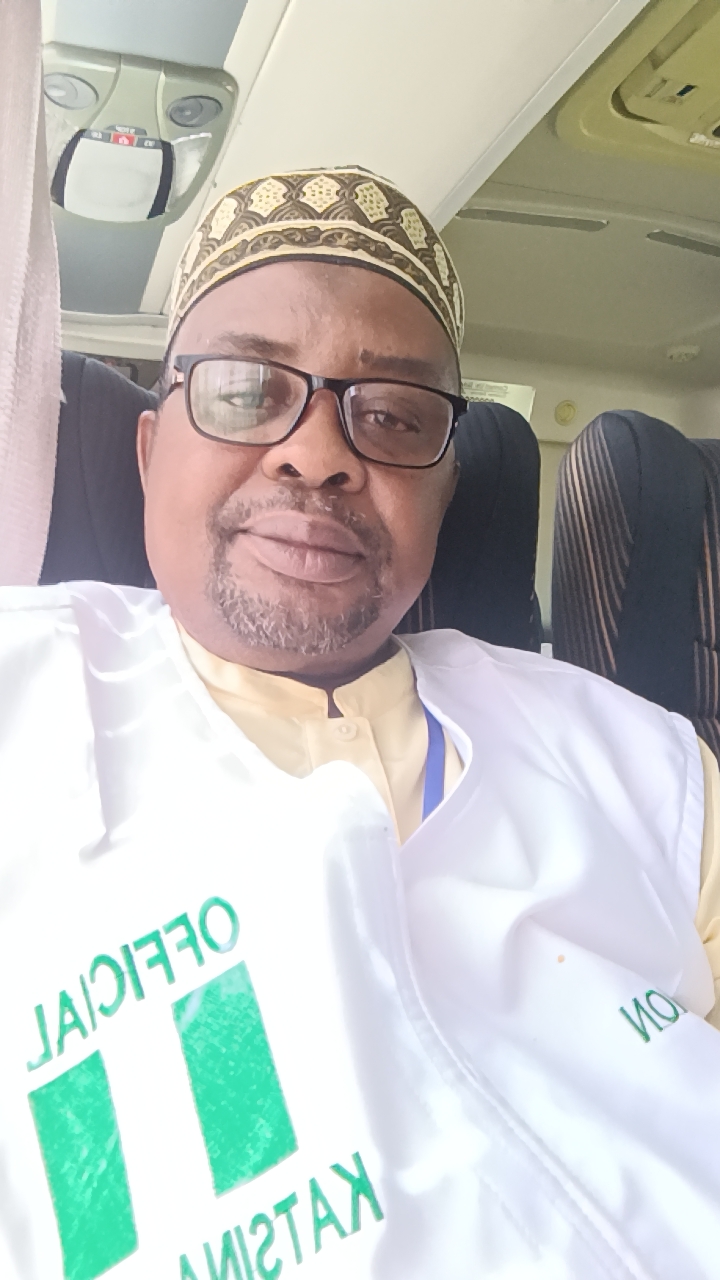

By the time our bus finally departed from Jeddah for Madinah after a long and exhausting wait, one thought kept returning to my mind: perhaps this is where the real sacrifice of Hajj truly begins.
The road journey of more than 400 kilometers between Jeddah and Madinah is not merely a physical movement across the desert landscape of Saudi Arabia. For many pilgrims, especially first-timers, it becomes an emotional transition — from ordinary life into a state of endurance, patience, humility, and submission.
Ironically, we were not originally meant to make that journey by road.
Our flight from Katsina was initially scheduled to land directly in Madinah. That arrangement would have spared hundreds of pilgrims the fatigue of long hours on the highway. But somewhere along the line, without prior explanation or official clarification, our boarding passes were suddenly changed by the airline from Madinah to Jeddah.
That unexpected alteration became only one chapter in a much larger ordeal.
The fifth and final flight conveying the remaining intending pilgrims from Katsina State — including management staff of the Katsina State Pilgrims Welfare Board and members of the 2026 Hajj Delegation appointed by Governor Dikko Umaru Radda under the leadership of the Amirul Hajj, Barrister Ahmad Usman El-Marzuq — suffered repeated postponements that tested the patience of everyone involved.
The delays came one after another. Five times the departure was shifted without meaningful explanation to anxious passengers who had already mentally and spiritually prepared themselves for the sacred journey.
Then came the most difficult moment.
After completing screening formalities at the Umaru Musa Yar’adua Airport in Katsina, passengers remained stranded for more than sixteen exhausting hours waiting for the aircraft that never arrived on time. Elderly pilgrims slept on chairs and floors. Families clung to bags and documents. Volunteers and officials struggled to calm frustration and uncertainty.
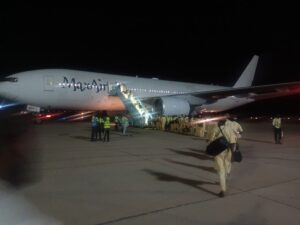
Eventually, the aircraft landed — carrying some intending pilgrims from Kano State before taking the Katsina contingent.
For many passengers, the experience was deeply disappointing.
At a time when global aviation increasingly emphasizes customer service, passenger communication, and operational transparency, such treatment remains a painful reminder that Nigerian air travelers still face serious challenges. Delays may sometimes be unavoidable, but silence and lack of explanation often make hardship worse.
Yet, perhaps unknowingly, the entire experience also mirrored one of the deepest spiritual lessons of Hajj itself: endurance.
Hajj has never been designed as a journey of luxury or convenience alone. Its rituals are built around sacrifice, patience, physical exertion, self-control, and humility before Allah.
That reality became even clearer during our stopover on the road to Madinah.
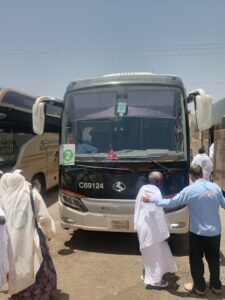
The buses pulled into a crowded rest area so pilgrims could eat, pray, and refresh themselves after the long trip from Jeddah. Immediately, long queues formed at the restaurants and toilets. Pilgrims waited patiently for food, water, ablution, and space to pray.
Standing there in those lines, watching tired pilgrims carry bags, searching for seats, helping elderly companions, and trying to maintain composure despite exhaustion, I was suddenly transported back nearly twenty years — to my first Hajj during the 2006/2007 season.
The memories came rushing back vividly.
Back then, long waits, crowded facilities, and difficult movements between holy sites were normal parts of the pilgrimage experience. Although Saudi Arabia has since introduced massive infrastructural improvements, digital systems, expanded facilities, modern transportation, air-conditioned tents, crowd control technology, and the Nusuk identification system, one thing has remained constant: Hajj still demands patience.
Perhaps that is the wisdom behind it all.
No matter how modern the facilities become, Hajj still strips pilgrims of comfort and reminds them of human equality and dependence on Allah. Rich and poor wait in the same lines. Powerful and ordinary people face the same heat, fatigue, uncertainty, and discomfort.
In those moments, titles disappear.
What remains is faith.
And so, somewhere between the delayed flight from Katsina, the sleepless hours at the airport, the long desert road from Jeddah to Madinah, and the crowded queues at a roadside stop, it became clear to many of us that the pilgrimage had truly begun long before reaching the holy sites.
Because sometimes, the real Hajj starts not at the Ka’abah, Mina, or Arafat — but in the patience required to endure the journey itself.