
By Our Reporter
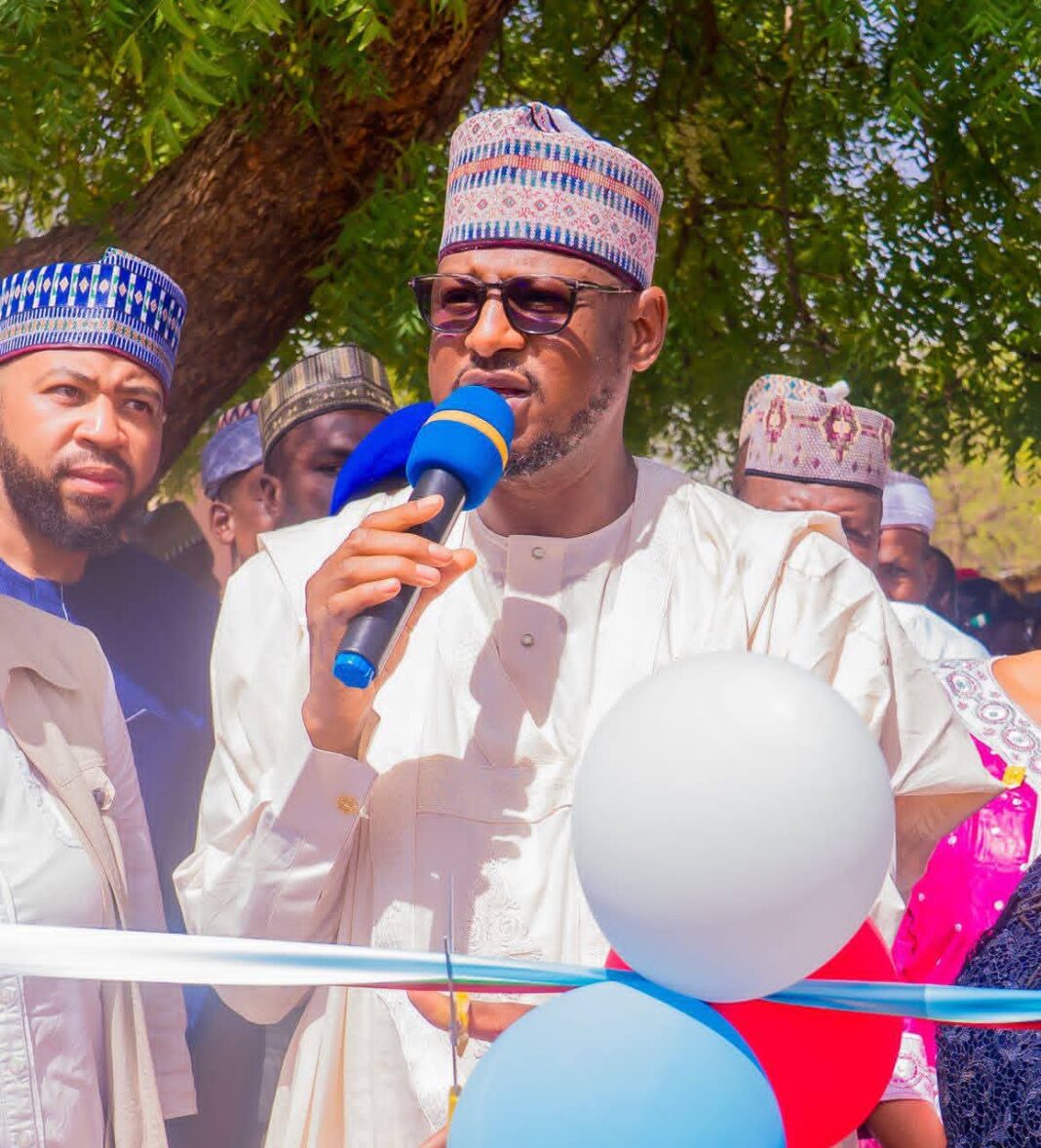
Katsina State Governor, Malam Dikko Umaru Radda, has commissioned the Climate Peace Hub and a 50-kilowatt peak (50kWp) Solar Mini-Grid in Jibia Local Government Area, describing the projects as major investments in peacebuilding, climate resilience, renewable energy and economic empowerment.
The projects, executed through a partnership involving the Katsina State Government, the United Nations Development Programme (UNDP), the Government of Norway and other development partners, are aimed at improving livelihoods in communities affected by insecurity and climate change.
Speaking at the inauguration, Governor Radda said the Climate Peace Hub represents a new approach to community development by integrating peacebuilding, technology, agriculture, climate adaptation and vocational training.
“This facility represents the future of community development. It brings together peacebuilding, climate adaptation, technology, agriculture and skills acquisition under one roof. Our administration remains committed to supporting initiatives that empower our people, create opportunities for women and youths, and strengthen peaceful coexistence among communities,” the governor said.
He described the hub as more than a physical structure, saying it symbolises hope and innovation for vulnerable communities.
According to him, the facility will provide access to modern agricultural technologies, vocational skills, conflict resolution mechanisms and digital training that will improve livelihoods and strengthen community resilience.
The governor noted that the project aligns with his administration’s vision of promoting inclusive development and sustainable economic growth, particularly in communities recovering from insecurity.
He also commissioned a 50kWp Solar Mini-Grid in Daddara, Jibia Local Government Area, to provide clean and reliable electricity to households, businesses and agro-processing enterprises.
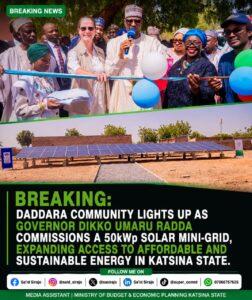
The governor said the renewable energy project would stimulate economic activities, improve productivity and support local businesses by providing a dependable source of electricity.
Radda commended the UNDP, the Governments of Norway and Germany, and other development partners for supporting Katsina State in implementing projects that promote sustainable development and peace.
He stressed that strong partnerships remain essential to addressing the complex challenges posed by insecurity, climate change and poverty.
During a tour of the Climate Peace Hub, the governor met Hafsat Rabi’u, a young woman living with a disability who acquired vocational skills at the facility.
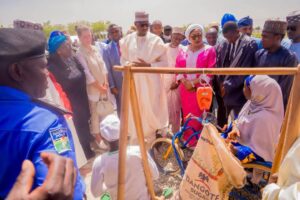
Impressed by her determination and performance, Radda directed that she be considered for employment in the Katsina State Civil Service.
Earlier, the Manager of the Climate Peace Hub, Mohammed Aliyu, explained that the facility was designed as an integrated centre for climate adaptation, conflict prevention and economic empowerment.
He said the hub houses Nigeria’s first climate-focused automatic weather station, which provides timely weather information to farmers and herders, as well as a conflict resolution centre, smart agriculture demonstration farms, aquaponics facilities, livestock watering points, renewable energy systems and a modern ICT centre.
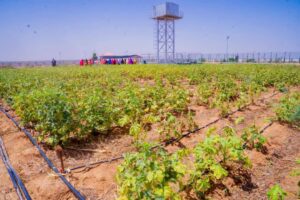
Aliyu added that the centre also offers vocational training in tailoring, salon services, plastic recycling, sustainable charcoal production and other trades aimed at empowering women, youths and internally displaced persons.
According to him, beneficiaries of the agricultural component are already earning substantial daily income from farming activities, while more than 100 women have completed various vocational training programmes at the hub.
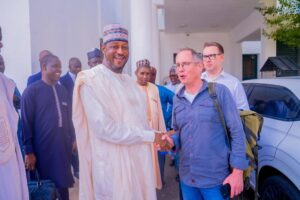
The commissioning ceremony was attended by the Norwegian and German ambassadors, representatives of the UNDP, members of the Katsina State Executive Council, lawmakers, traditional rulers, development partners and other stakeholders.