
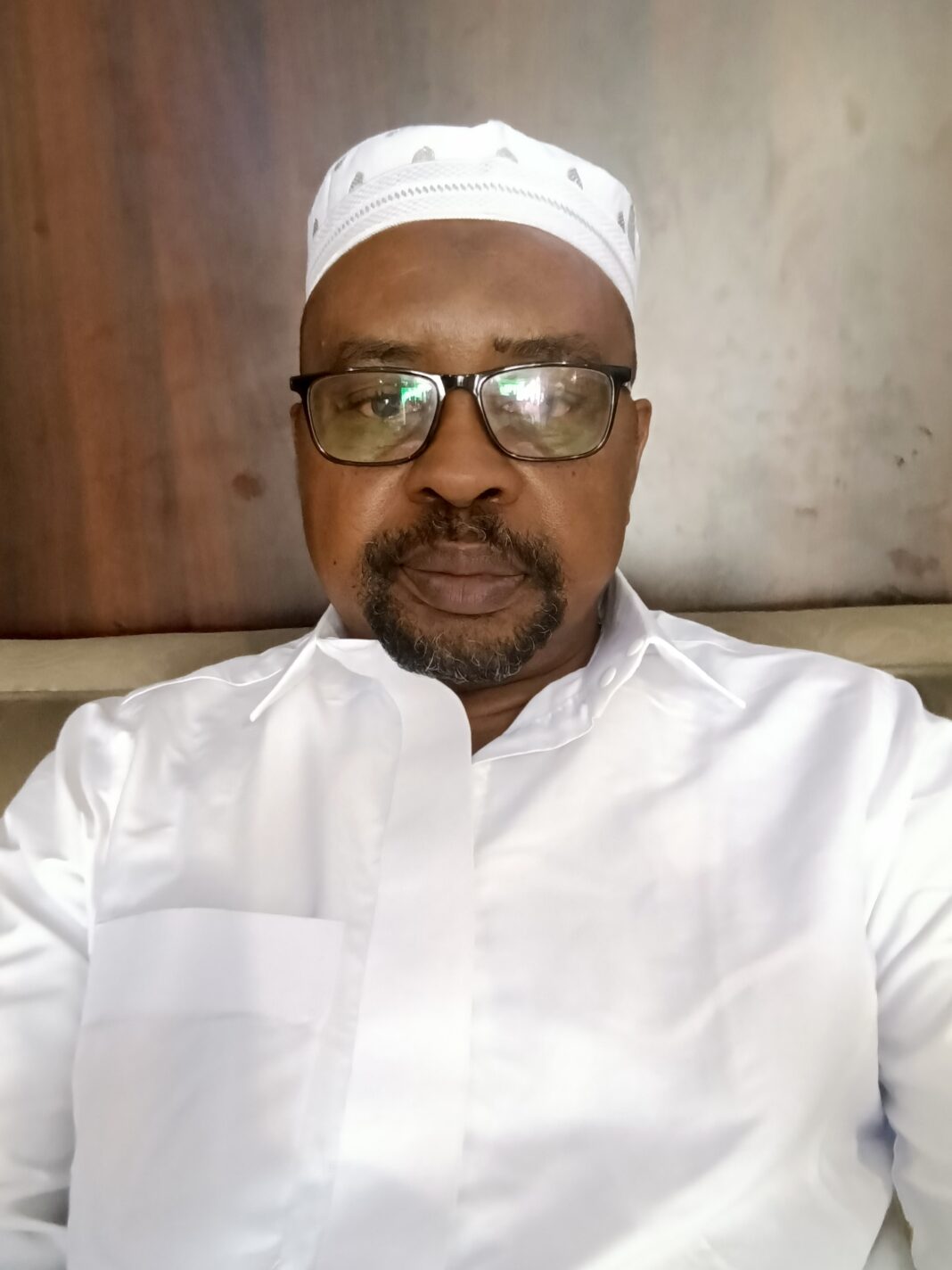

By Ahmed Abdulkadir
No account of my Hajj experience would be complete without recounting my own personal ordeal.
Like many pilgrims, I travelled to the Holy Land with excitement and anticipation, fully aware that Hajj is physically demanding. But I never imagined that my greatest challenge would begin even before the major rites of Hajj commenced.
It all started after our exhausting seven-hour journey of more than 400 kilometres from Madinah to Makkah.
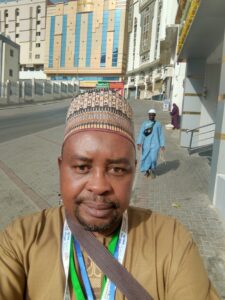
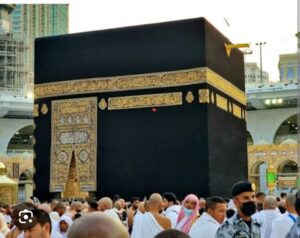
Soon after our arrival, we set out to perform the Umrah that would precede our Tamattu’ Hajj. From our hotel, we trekked more than ten kilometres to and from the Grand Mosque, completing the Tawaf, the Sa’y between Safa and Marwah and finally returning to our hotel on foot.
By the time I got back, I noticed that the skin between my thighs had become badly grazed. The constant friction caused by the long walk had left the area painfully raw, making every subsequent step an agonising experience.
It was not an entirely new experience.
I had suffered the same condition during my first Hajj in 2006/2007. Years later, it returned during one of the darkest moments of my life, when my daughter and I were abducted by bandits and forced to trek for well over 100 kilometres to their hideout. The prolonged walking under harsh conditions had produced the same painful chafing.
This time, however, I had hoped never to experience it again.
Instead of improving, the condition—medically known as intertrigo or thigh chafing—became progressively worse. Walking became increasingly difficult.
Concerned, I visited the NAHCON clinic located on the first floor of our hotel in Makkah. After enduring a long queue, I was eventually attended to by a female doctor.
Her prescription was surprisingly simple.
“Apply Vaseline,” she advised.
Nothing more.
I faithfully followed the advice, hoping for relief. But after several days, the condition only deteriorated further. The pain became so severe that I could no longer make the journey to Masjid al-Haram for the congregational prayers.
That development was particularly painful emotionally. Having travelled thousands of kilometres to worship in Islam’s holiest mosque, I suddenly found myself confined to the hotel.
Then came an unexpected source of comfort.
During one of the daily religious lectures organised for Katsina pilgrims in our hotel, one of the scholars explained that our hotel was located within the sacred boundaries of the Haram. Consequently, congregational prayers offered in the hotel’s mosque attracted the same reward associated with praying within the Haram precincts.
That explanation brought me immense relief.
Unable to make the long walk to the Grand Mosque, I resigned myself to praying in the hotel mosque while nursing my injury and praying fervently that it would heal before the physically demanding Hajj rites began.
When it became obvious that the Vaseline was having little or no effect, I returned to the clinic.
This time I was attended to by a male doctor.
After examining me, he prescribed a medicated ointment and additional medication. Unfortunately, the clinic’s pharmacy had run out of the prescribed drugs. I had to purchase them from a nearby pharmacy with my own money.
Gradually, the new treatment began to work.
The pain reduced, but the wound had not completely healed by the time we departed for Mina on the 8th of Dhul-Hijjah to begin the major Hajj rituals.
Naturally, I became apprehensive.
How would I cope with the long walks that lay ahead?
The stoning of the Jamarat alone would involve trekking several kilometres under the scorching Arabian sun.
I feared the worst.
Then something happened that I can only describe as one of those small mercies that Allah grants His servants.
After returning from Arafat and Muzdalifah, we set out for the first stoning at Jamarat. I began the journey with a noticeable limp, expecting the pain to intensify with every step.
Instead, as the intense heat caused perspiration to flow freely, sweat trickled down my body and reached the affected area between my thighs. Quite unexpectedly, it acted as a natural lubricant, reducing the friction that had caused me so much agony.
To my amazement, I found myself walking almost painlessly.
The discomfort that had troubled me for days virtually disappeared during the very period when I needed strength the most.
From that day onward, I completed all the remaining Hajj rituals without the severe pain I had dreaded.
It was a reminder that Allah’s relief sometimes comes in ways we could never have imagined.
Just when I thought my ordeal was over, another trial emerged.
Shortly after completing the Hajj rites, I developed a severe cold despite consistently wearing a face mask as a precaution against respiratory infections.
The cold quickly progressed into a persistent cough accompanied by chest pains and fever. Once again, I found myself back at the clinic.
The queue was enormous.
For over an hour I waited, inching slowly forward with dozens of other sick pilgrims. Eventually, I became exhausted and almost gave up.
Out of frustration, I telephoned my daughter, Dr. Mauluda, back home in Nigeria. After listening to my symptoms, she promptly sent me a prescription.
I had practically decided to leave when my name was suddenly called.
The doctor attended to me, examined me and prescribed medication remarkably similar to what my daughter had recommended. This time, I was fortunate. The drugs were available in the clinic’s pharmacy and were issued to me immediately without charge.
It still took several days before I fully recovered.
Looking back now, I realise that my experience was not unique.
Every pilgrim carries his or her own test. Some struggle with the heat. Others battle fatigue, illness, separation from loved ones or the emotional burden of repentance.
Mine happened to be physical pain.
Yet every difficulty reminded me of one of the enduring lessons of Hajj: acts of worship are not measured only by moments of comfort, but often by the patience with which hardship is endured.
The Prophet (peace be upon him) taught that no fatigue, illness, anxiety or hardship afflicts a believer except that Allah expiates some of his sins through it.
With that assurance in mind, I choose to believe that every painful step, every sleepless night, every fever, every queue at the clinic and every moment of discomfort formed part of my own Hajj.
Perhaps these trials were not interruptions to the pilgrimage.
Perhaps they were the pilgrimage itself.
And I pray that Allah, in His infinite mercy, counts every one of them among the rewards of my Hajj.