
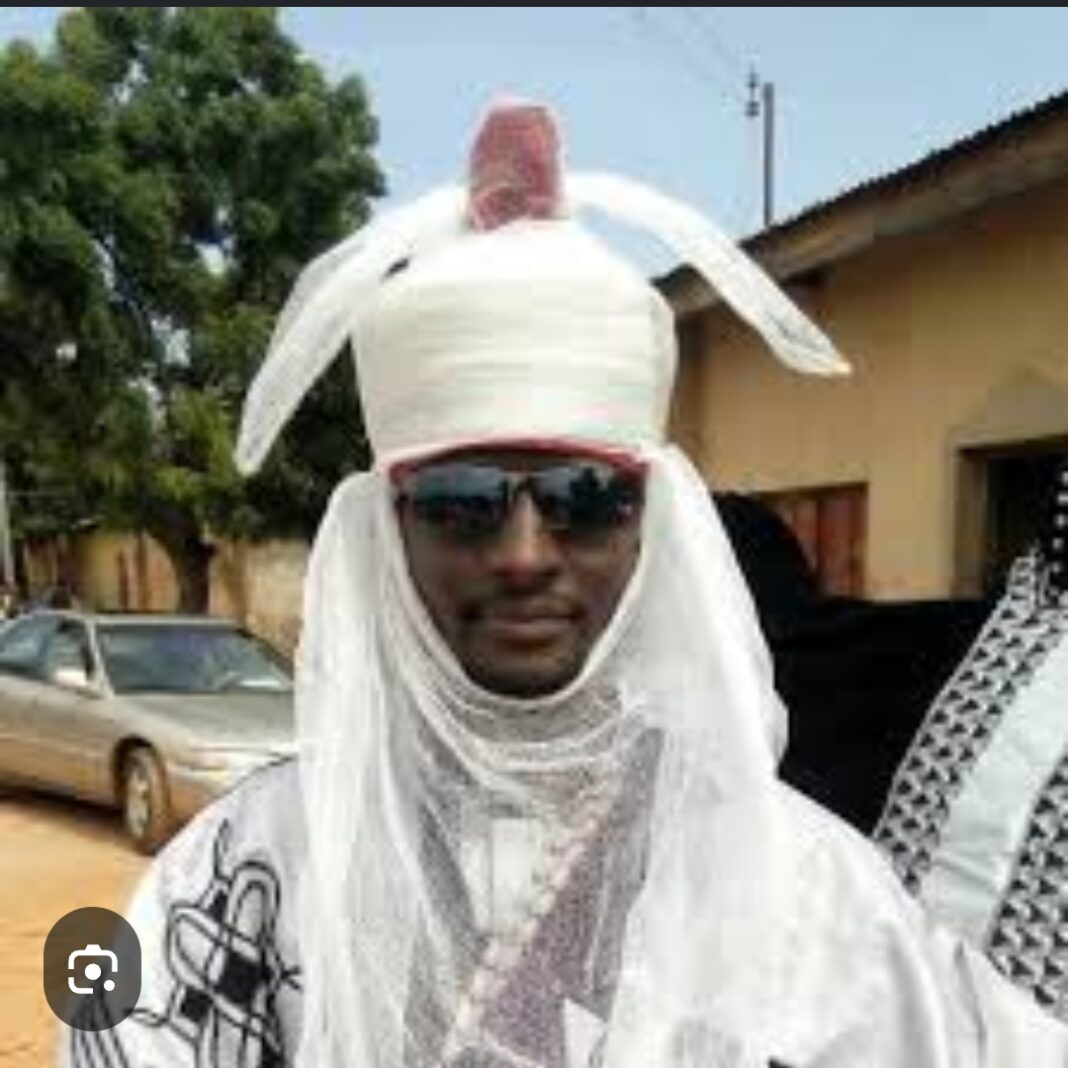

By Engr. Kabiru el-Hussain Rumah
Jakadan Rumah
There is something fundamentally wrong with the way we, as individuals and as a society, think about security in Nigeria generally and Katsina State in particular.
The reality is that our collective security is the sum of three essential components:
Personal Security + Family Security + Community Security = Collective Security
This simple security equation is often overlooked by many of us, including those responsible for managing security.
Before anyone can provide security for you, you must first take responsibility for your own safety. Next comes the security of your family. When families work together to safeguard their neighbourhoods, strong and resilient communities emerge. Government’s role is primarily to complement and facilitate these efforts.
The truth is that no combination of security agencies, no matter how well equipped, can effectively, efficiently and economically guarantee the safety of every citizen without the active participation of individuals, families and communities.
If anyone doubts this, let us examine some publicly available facts.
According to reports by Vanguard and Daily Trust, Nigeria currently has between 370,000 and 372,000 police officers, resulting in an average police-to-citizen ratio of approximately one officer to every 650 citizens, compared with the United Nations’ recommended ratio of one officer to every 450 citizens.
Even more concerning is that an estimated 26 to 30 per cent of police personnel—about 100,000 officers—are engaged in non-policing duties such as VIP protection, escort services and protocol assignments. This effectively leaves the country with a policing ratio of well over one officer to every 1,000 citizens.
With Nigeria’s population now estimated at about 229 million, the country faces a shortage of roughly 190,000 police officers, according to former Inspector-General of Police, Kayode Egbetokun.
The situation in Katsina State is equally worrying.
With an estimated population of about 11 million people, Katsina would require between 9,000 and 10,000 additional police officers to attain the United Nations’ recommended policing ratio. Current estimates place the state’s police-to-population ratio at between 1:750 and 1:850.
Ironically, while a Nigerian senator is said to have an average of six police officers attached for official security and a minister about ten officers for personal protection, some local government areas in Katsina have only 39 police officers serving populations exceeding 100,000 people.
Governor Malam Dikko Umaru Raɗɗa himself highlighted this challenge during an interview with DW Hausa in September 2024 when he said:
“Currently, in Katsina State, there is a Local Government Area with only 39 police officers and nine guns, of which only five are serviceable. The LGA has ten political wards and more than 200 villages. Under such circumstances, how can only 39 police officers adequately protect the people?”
One wonders whether this situation is unique to a single local government area such as Batsari or whether similar realities exist elsewhere across the state.
This concern is not new.
In August 2020, the former Governor of Katsina State, Rt. Hon. Aminu Bello Masari, similarly observed:
“Only about 30 police officers, on average, provide security for 100 villages in Katsina State. We have fewer than 4,000 police officers serving the state’s 34 local government areas and a population of over eight million.”
These sobering statistics clearly demonstrate the enormous pressure on conventional policing in both Nigeria and Katsina State.
The figures reinforce an important lesson: security cannot and should not be seen solely as the responsibility of government or the security agencies.
Citizens must become active participants in safeguarding their communities by remaining vigilant, cooperating with law enforcement, sharing credible intelligence, strengthening neighbourhood watch initiatives and promoting community-based approaches to crime prevention.
Only through a partnership between government, security agencies and responsible citizens can we hope to build a safer Katsina State where lives, property and freedom are adequately protected.
Engr. Kabiru el-Hussain Rumah is the Jakadan Rumah and Founder of the Jakadan Rumah Foundation (JRF), Katsina State.