
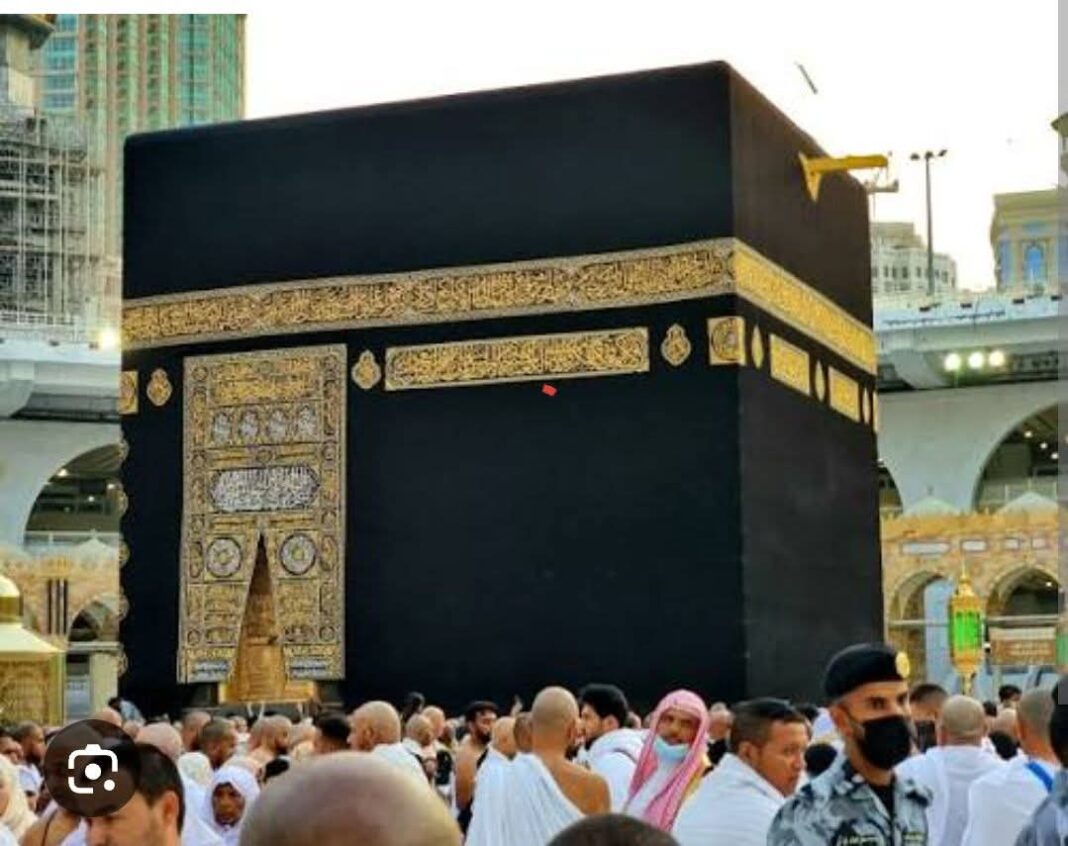

As my Hajj reflections gradually draw to a close, I find myself thinking not only about the rituals, the challenges and the lessons of the pilgrimage, but also about the little things that quietly shaped my experience.
One of the greatest surprises was not spiritual, physical or emotional.
It was time itself.
There is a two-hour time difference between Saudi Arabia and Nigeria, with the Kingdom being two hours ahead. Before leaving home, I thought the adjustment would be insignificant.
I was wrong.
When we landed in Jeddah, I deliberately refused to adjust my wristwatch. I wanted to keep track of Nigerian time so I would know the appropriate moments to call family, friends and colleagues back home.
It turned out to be an unnecessary precaution.
My mobile phones conveniently displayed both Nigerian and Saudi times.
Yet knowing the time was one thing.
Adjusting my body clock was another.
It did not take me long to notice that life in the Holy Cities, particularly Makkah, followed a rhythm very different from what I was accustomed to in Nigeria.
People seemed to come alive at night.
The streets bustled with activity long after midnight. Pilgrims streamed endlessly towards the Haram. Restaurants remained busy. Shops stayed open. Families moved around as though midnight were early evening.
Daytime, on the other hand, was relatively quiet.
Many people rested after the dawn prayer or during the heat of the afternoon, conserving their energy for the night’s activities and worship.
Unlike many of my colleagues, however, my internal clock refused to cooperate.
While everyone around me quickly adapted to the Saudi routine, my body stubbornly clung to Nigerian time.
When others slept, I was often wide awake.
When they were energetic, I was exhausted.
It took my brain a surprisingly long time to adjust.
Fortunately, I found companionship in the one object that never seemed to sleep—my phone.
By nature, I have never been someone who enjoys afternoon naps. That habit followed me to Saudi Arabia.
By the time Maghrib approached, I was usually completely worn out. Hunger would begin to announce itself about an hour before sunset, prompting me to develop a new habit.
Almost every evening, I would take a cup of tea with light snacks while waiting for the Maghrib prayer.
Perhaps that explained what happened next.
Immediately after Maghrib, overwhelming sleep would descend upon me.
On several occasions, I literally rushed back to my room after the prayer just to catch some sleep before Isha.
Ironically, while others remained active deep into the night, I often found myself asleep.
But that routine had one unexpected advantage.
Because I slept early, I also woke up very early.
After the Subhi prayer, while many of my colleagues returned to bed for a few more hours of sleep, my day had already begun.
Those peaceful early morning hours became some of the most productive moments of my pilgrimage.
With the hotels still quiet and most pilgrims asleep, I would sit with my phone, responding to messages from Nigeria, reading, reflecting and, most importantly, writing.
In many ways, several of these articles were conceived and drafted while Makkah itself was still asleep.
If the difference in time was one of my greatest adjustments, the friendships I made became one of the greatest blessings of the journey.
One of the most heartwarming experiences throughout the pilgrimage was discovering how many people already knew me, even though we had never met.
Some recognised me from my years as a journalist and current affairs programme presenter with Katsina State Television (KTTV).
Others knew me only through Facebook.
Time and again, complete strangers would stop me and politely ask:
“Are you Ahmed Abdulkadir?”
When I answered in the affirmative, they would smile and explain that they regularly read my posts online.
Each encounter reminded me of the unseen connections that social media can create when used positively.
One particular meeting remains especially memorable.
One day, while shopping in Makkah with members of our delegation, a pleasant-looking couple approached and greeted me warmly.
For a moment, I searched my memory, convinced we must have met somewhere before.
Sensing my confusion, the gentleman smiled.
“I know you,” he said.
“I’m one of your followers on Facebook.”
He introduced himself as Usman Bello Gusau from Zamfara State and explained that his wife hailed from Katsina State.
I immediately searched for his profile on Facebook and sent him a friend request, which he accepted on the spot.
After exchanging pleasantries, we bade each other farewell, promising to remain in touch long after Hajj.
It was yet another reminder that Allah often creates bonds between people who had previously been complete strangers.
Then there were the companions with whom I shared virtually every day of the pilgrimage.
From our earliest meetings in Nigeria until the completion of Hajj, four of us lived together, travelled together, worshipped together and shared the same rooms in Madinah, Makkah, Mina and Arafat.
Each was a remarkable personality in his own right.
The eldest among us was the Galadiman Daura and District Head of Mai’adua, Engr. Ahmadu Diddiri Ahmed.
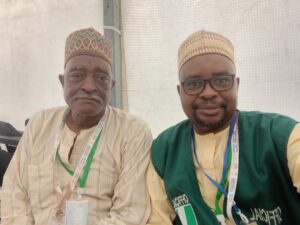
Many people know him today as a respected traditional ruler.
What fewer people know is that before ascending the traditional stool, he had built an impressive academic career as a lecturer in Agricultural Engineering at the prestigious Ahmadu Bello University, Zaria.
Duty eventually called him away from the university classroom to the palace, where he now serves the Daura Emirate with equal distinction.
He represented the Daura Emirate Council in the 2026 Katsina State Hajj Delegation.
The second was Alhaji Isah Ali Kankiya, the Dansaran Katsina and Secretary of the Katsina Emirate Council, who represented the Emirate in the delegation.
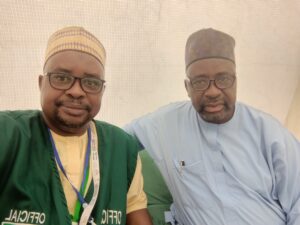
Our conversations became even more interesting when we discovered that we had something in common academically.
Both of us studied for a Master’s degree in Development Studies at Bayero University, Kano. I was only one academic session ahead of him. Before his present appointment at the Katsina Emirate Council, he had served as an Information Officer and later rose to become Head of the Education and Social Services Department at the local government level. His background in public communication and administration gave him a unique perspective on governance and development issues.
The third was Dr. Yusuf Ibrahim Safana, Special Adviser to the Governor of Katsina State on Community Watch Corps (C-Watch).
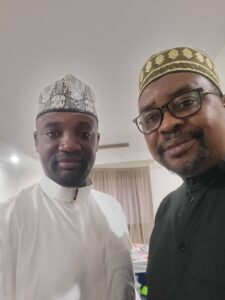
Before entering public service, Dr. Safana lectured in Political Science at Al-Qalam University, Katsina. He holds a Ph.D in International Relations, specializing in Human and Environmental Security.
Because Development Studies and Political Science intersect in many areas of governance, public policy and development administration, our discussions often found common intellectual ground. Whether we were talking about leadership, community development, public institutions or Nigeria’s political future, the conversations were always stimulating and enlightening.
Four men.
Four entirely different backgrounds.
Four different careers.
Yet throughout our stay, we lived together like brothers.
We shared rooms, meals, experiences, jokes, reflections and long intellectual conversations that frequently stretched late into the night.
Differences in age, profession and social status simply melted away.
What remained was mutual respect, understanding and genuine friendship.
Even in Mina and Arafat, our mattresses happened to be positioned close to that of the Amirul Hajj, Barrister Ahmad Usman El-Marzuq.
That proximity afforded us the opportunity to observe him closely beyond the formal meetings and official engagements.
Away from the responsibilities of leadership, I found him to be remarkably humble, approachable and easy-going.
He moved freely among officials and pilgrims alike, listening patiently to complaints, offering words of encouragement and personally ensuring that challenges were addressed as promptly as possible.
His simplicity made interaction easy and contributed immensely to the pleasant atmosphere within our section of the camp.
Looking back now, I realise that Hajj gives every pilgrim two kinds of memories.
The first are the sacred memories of worship—the Tawaf around the Ka’abah, the standing at Arafat, the nights in Mina and the stoning of the Jamarat.
The second are the human memories—the conversations, the friendships, the unexpected encounters, the laughter, the shared meals and the quiet moments that remind us that beyond rituals, Hajj is also a journey of people.
Long after the physical exhaustion has faded and the souvenirs have been packed away, it is these relationships that remain among the greatest treasures of the pilgrimage.
For while Hajj brings millions of strangers together in one place, it often sends them home as lifelong friends.
And perhaps that, too, is one of Allah’s countless blessings hidden within the pilgrimage.