
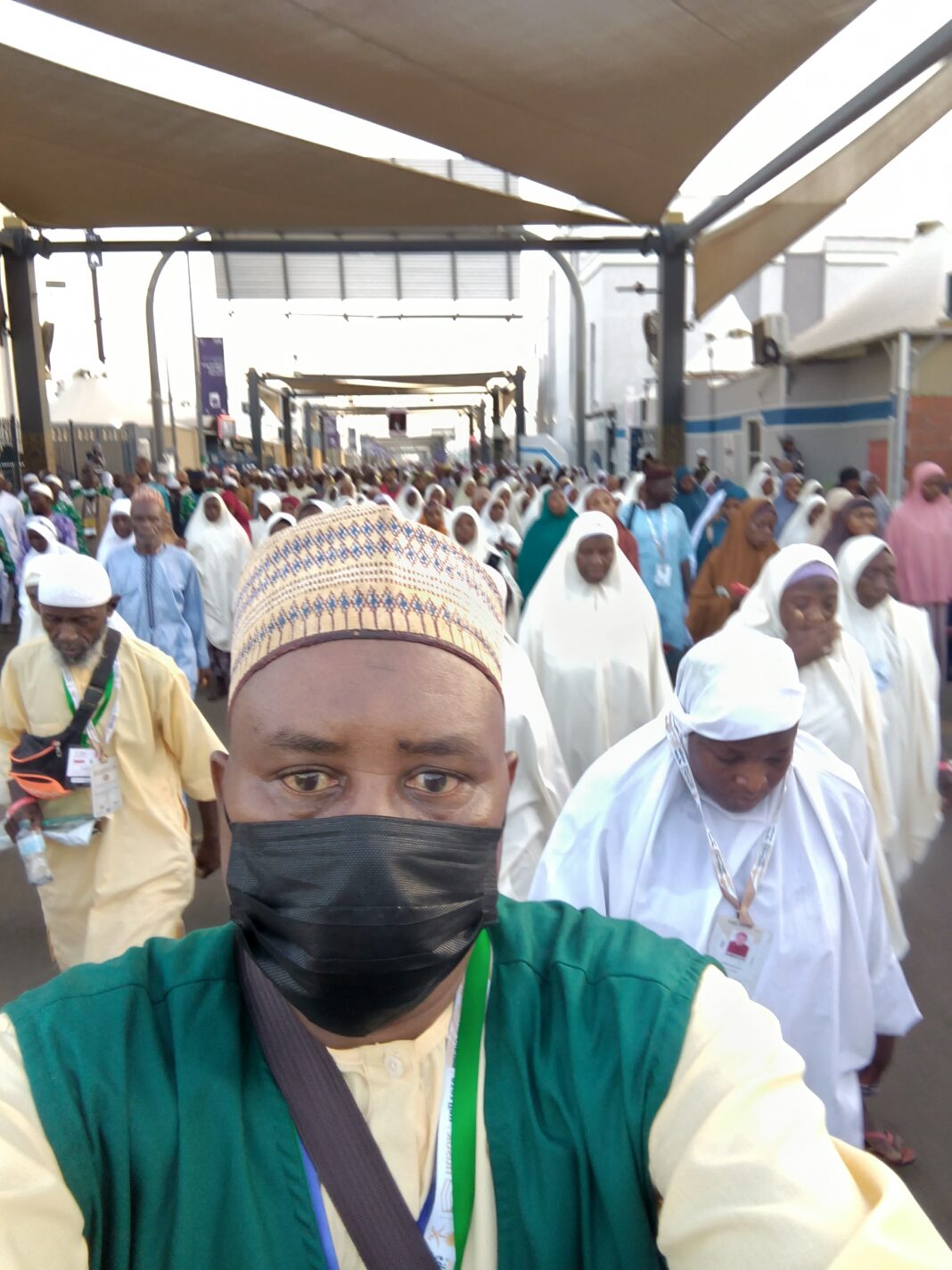

After the first stoning at Jamarat, I thought our trekking ordeal had finally come to an end. I was mistaken.
The following day, we embarked on yet another arduous journey from Mina to Jamarat and back for the second mandatory stoning. The round trip covered approximately 10 kilometres, a distance that tested the endurance of even the most physically fit pilgrims.
To their credit, the arrangements put in place by the Katsina State Pilgrims Welfare Board were superb. Pilgrims were divided into three groups, each led by a hired native guide familiar with the terrain and routes. To ensure that no one got lost in the massive sea of humanity, each guide carried a long pole with the group’s number prominently displayed at the top, making it visible even from a considerable distance.
The trek began immediately after the dawn prayer. Despite the early start, the heat was already intense. Fortunately, several measures had been put in place to ease the discomfort. Along the route, large fans intermittently sprayed fine droplets of water while blowing cool air towards passing pilgrims. Water tanks fitted with taps were strategically positioned along the streets, providing thirsty pilgrims with easy access to drinking water.
Acts of kindness were also everywhere. Some good Samaritans stood by the roadside armed with improvised plastic bottles punctured with tiny holes, spraying refreshing streams of water on overheated pilgrims as they passed.
Yet, despite these thoughtful arrangements, the journey remained strenuous. The long trek was enough to leave one’s limbs numb with exhaustion. I had always taken pride in my physical fitness, maintaining a routine of trekking about four kilometres every morning. Even so, this challenge proved far more demanding than I had anticipated.
By the time we completed the second stoning and made the long trek back to our camp in Mina, we were physically drained. Our clothes were soaked with sweat, our feet ached, and our only consolation was the prospect of cooling off in the comfort of our well-air-conditioned tent.
That hope vanished the moment we stepped inside.
The air-conditioning system had broken down.
Our hearts sank. After hours under the scorching Arabian sun, the thought of spending the afternoon in a stifling tent was almost unbearable. At that moment, the cool air of the tent seemed as essential as food and water.
It was then that the Amirul Hajj came to our rescue. Rather than assigning the task to someone else, he personally went in search of a technician. Before long, he returned with one, and the fault was repaired, restoring not only the air-conditioning but also the spirits of the exhausted pilgrims.
What made the gesture even more remarkable was that the Amirul Hajj himself was sharing the same conditions as the rest of us. He was not staying in a special enclosure reserved for dignitaries and officials. The tent designated for the delegation and government officials had already been occupied by pilgrims before our arrival in Mina. When informed of the situation, he reportedly directed that the pilgrims should be left undisturbed.
As a result, he slept in the same tent with ordinary pilgrims throughout our stay, enduring the same heat, congestion and discomfort as everyone else. It was a simple but powerful demonstration of leadership by example.
The restoration of the air-conditioning was greeted with almost as much joy as the completion of the day’s ritual itself.
The next day, we repeated the exercise for the third and final mandatory stoning. This time, however, there was a sense of anticipation and relief. Rather than returning to our camp in Mina after completing the rites, we proceeded directly to Makkah.
For many pilgrims, the journey was not yet over. Those who had not completed their Tawaf and Sa’y headed straight to Masjid al-Haram to fulfil those remaining obligations. The rest of us made our way to our hotels, eager to enjoy some much-needed rest after days of physical exertion and spiritual devotion.
It was during this period of rest and reflection that another side of the Hajj experience emerged. Beyond the solemn rituals, prayers and sacrifices, pilgrims gathered in hotel lobbies and rooms to exchange stories about their experiences. Some of these tales provided much-needed comic relief after the physically demanding days in Mina and Arafat.
One story that quickly became a favourite concerned a Fulani man performing the stoning ritual at Jamarat. Whether the story was entirely true or embellished in the retelling, no one seemed particularly concerned. According to the tale, the man became so immersed in the symbolic rejection of Satan that he appeared to be confronting the devil in person.
As the story goes, he suddenly jumped forward, pointed furiously at an imaginary Shaytan and hurled his pebble with all the force he could muster, shouting in Hausa: “Dan ubanka Shaytan, amshi wannan!”
The dramatic reenactment, complete with the imagined confrontation, sent listeners into fits of laughter whenever the story was recounted. Many pilgrims admitted they had witnessed similarly enthusiastic performances during the stoning exercise. While the ritual is symbolic and deeply spiritual, some worshippers seemed determined to make absolutely certain that Satan received the message.
Whether fact or folklore, such stories added colour and humanity to an experience otherwise marked by intense devotion, discipline and sacrifice.
As I settled into my hotel room, a profound sense of fulfilment washed over me. The rituals had been completed. The prayers had been offered. The sacrifices had been made. The physical challenges, the long walks, the heat and the exhaustion were now behind us.
For me, the pilgrimage had finally come to an end.
And so, as tradition permits, you may now call me Alhaji.
Alhamdulillah.