


Katsina State Governor, Malam Dikko Umaru Radda, has declared that his administration will end the practice of exporting live livestock in its raw form, saying the state is shifting its focus to local meat processing as part of efforts to create jobs, increase farmers’ earnings and strengthen the economy.
Radda made the declaration on Saturday at the North-West Agriculture and Livestock Stakeholders’ Symposium in Katsina, where he reaffirmed his administration’s commitment to transforming agriculture and livestock development into key drivers of poverty reduction and economic growth.
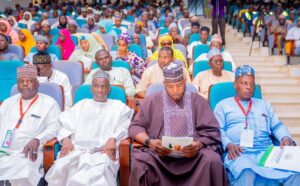
The symposium brought together stakeholders from the agriculture, livestock, transportation, food trade, security and development sectors across the North-West.
“We are committed to ending the practice of exporting livestock in raw form. Our focus is to process meat locally, create jobs for our young people, strengthen the local economy, and improve the earnings of livestock farmers through value addition,” the governor said.
He described the symposium as timely, noting that agriculture and livestock remain vital to food security, employment generation, revenue creation and national development.
Radda said improving agricultural productivity remains one of the most effective ways of tackling poverty in the North-West, stressing the need for stronger collaboration among farmers, traders, transporters, processors, security agencies and government institutions.
The governor acknowledged challenges confronting the sector, including insecurity, poor transportation networks, inadequate market infrastructure, climate change and limited access to finance.
He said the Katsina State Government had already initiated several interventions, including market upgrades, agricultural support programmes, livestock development projects and partnerships with private investors and development agencies.
Among the initiatives, Radda highlighted a ward-based agricultural empowerment programme covering all 361 political wards in the state to ensure women and smallholder farmers benefit directly from government support.
He also disclosed that the state had established a Goat Breeding Centre at Larinawa, which would be expanded into a comprehensive livestock development hub, while seven zonal veterinary clinics had been established to improve animal healthcare services.
The governor further revealed that construction of a modern slaughterhouse was at an advanced stage to improve meat processing standards and hygiene.
He reaffirmed the state’s commitment to working with the Federal Government, development partners and private investors to modernise agriculture, improve livestock management and strengthen food supply chains.
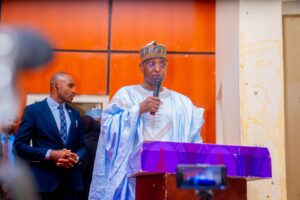
Earlier, the Minister of Livestock Development, Idi Mukhtar Maiha, commended the Katsina State Government for its investments in agriculture and livestock development, describing them as strategic interventions capable of transforming the sector.
Maiha said Nigeria’s livestock industry should shift from transporting live animals over long distances to processing meat close to production centres and moving packaged products through efficient cold-chain systems.
“The establishment of modern abattoirs and meat processing facilities will create jobs, increase revenue generation and stimulate growth across several related industries,” the minister said.
He also advocated the transformation of the Mai’adua International Livestock Market into a modern, digitally driven livestock exchange capable of attracting local and international investment.
The minister expressed concern over the impact of multiple security checkpoints on livestock transportation and called for stronger collaboration between government and the private sector to improve efficiency across the livestock value chain.
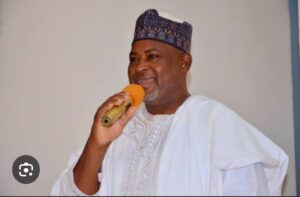
Professor Ahmed Mohammad Bakori
In his welcome address, the Katsina State Commissioner for Livestock Development, Professor Ahmed Bakori Mohammad, said the ministry had begun sensitisation campaigns across the state’s 34 local government areas to mobilise beneficiaries for the goat rearing empowerment programme.
He said extension officers and veterinary personnel would work closely with cooperatives, while quarterly review meetings would be held to address emerging challenges.
Bakori also disclosed that the state government had secured partnerships with microfinance institutions and private agribusiness firms to provide beneficiaries with access to credit and ready markets.
“Our goal is not just to distribute goats, but to create entrepreneurs who can compete in local and regional markets,” he said.
Also speaking, the National Chairman of the Amalgamated Union of Foodstuff and Cattle Dealers of Nigeria, Alhaji Kabiru Dabai, called on governments and stakeholders to remove obstacles hindering the movement of livestock and agricultural commodities across the country.
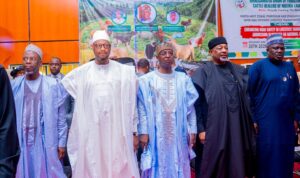
The symposium, themed “Enhancing Road Safety in Livestock Transportation and Addressing Blockages on National Highways,” focused on practical solutions to improve food security, strengthen agricultural value chains and promote economic development across the North-West.