


The Vice-Chancellor of Federal University Dutsin-Ma (FUDMA), Mohammed Khalid Othman, has announced plans to relocate most faculties, departments and the university’s central administration to the main campus by the next academic session.
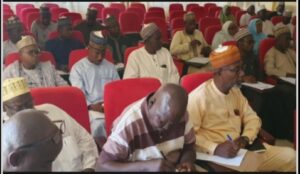
Prof. Othman disclosed this during an interactive session with members of the Committee of Provosts, Deans and Directors (CDD) held at the Senate Chambers of the main campus.

He said the relocation was part of ongoing efforts to fully utilise the university’s facilities, noting that student hostels currently lying idle were undergoing rehabilitation in preparation for the move. According to him, only a few facilities and departments would remain at the take-off campus.
The Vice-Chancellor expressed satisfaction with the smooth transition process so far, attributing the progress to the support and cooperation of stakeholders, particularly security agencies and traditional rulers.
He described the main campus as conducive for teaching, learning, research and community service, highlighting the presence of modern infrastructure and a solar power project capable of supplying electricity to both the campus and surrounding communities.
Prof. Othman also reaffirmed his commitment to the implementation of his administration’s 5-point agenda aimed at driving the growth and development of the institution.
The agenda, he said, focuses on boosting internally generated revenue, establishing a Centre for the Study of Hausa Language and Culture, enhancing security, promoting transparency and accountability, and strengthening capacity building for both academic and non-academic staff.
He stressed that all directorates and centres must contribute meaningfully to the achievement of the university’s goals and objectives, adding that efforts were ongoing to reposition the institution for better performance.
The Vice-Chancellor further revealed that a staff audit had been conducted to address imbalances between teaching and non-teaching personnel. He said non-teaching staff with relevant academic qualifications, particularly technologists, would be redeployed into teaching roles to address shortages in critical programmes.
In addition, he announced plans to introduce a mentorship system under which junior academic staff would be paired with senior lecturers for guidance and professional development.
He also disclosed plans to merge some directorates and centres to eliminate duplication and enhance efficiency, noting that university administration should be seen as a service to stakeholders rather than a source of patronage.
On staff welfare, Prof. Othman assured that efforts were being made to ensure timely disbursement of monthly imprest to faculties, departments and centres. He added that payment of responsibility allowances would be addressed once the 2026 budget is passed by the National Assembly and assented to by the President.
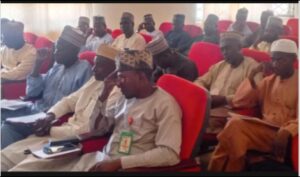
The meeting was attended by top university officials, including the Deputy Vice-Chancellor (Academics), Abubakar Sadiq Suleiman; Deputy Vice-Chancellor (Administration), Elizabeth Ihugh Yecho; the Registrar, Musa Ajiya; the Bursar, Abubakar Muhammad Gafai; and the University Librarian, Ukashatu Hamza Musa, alongside provosts, deans and directors.
Participants at the meeting discussed key challenges facing the university and proposed solutions, ending the session with a renewed commitment to advancing the institution’s development.