
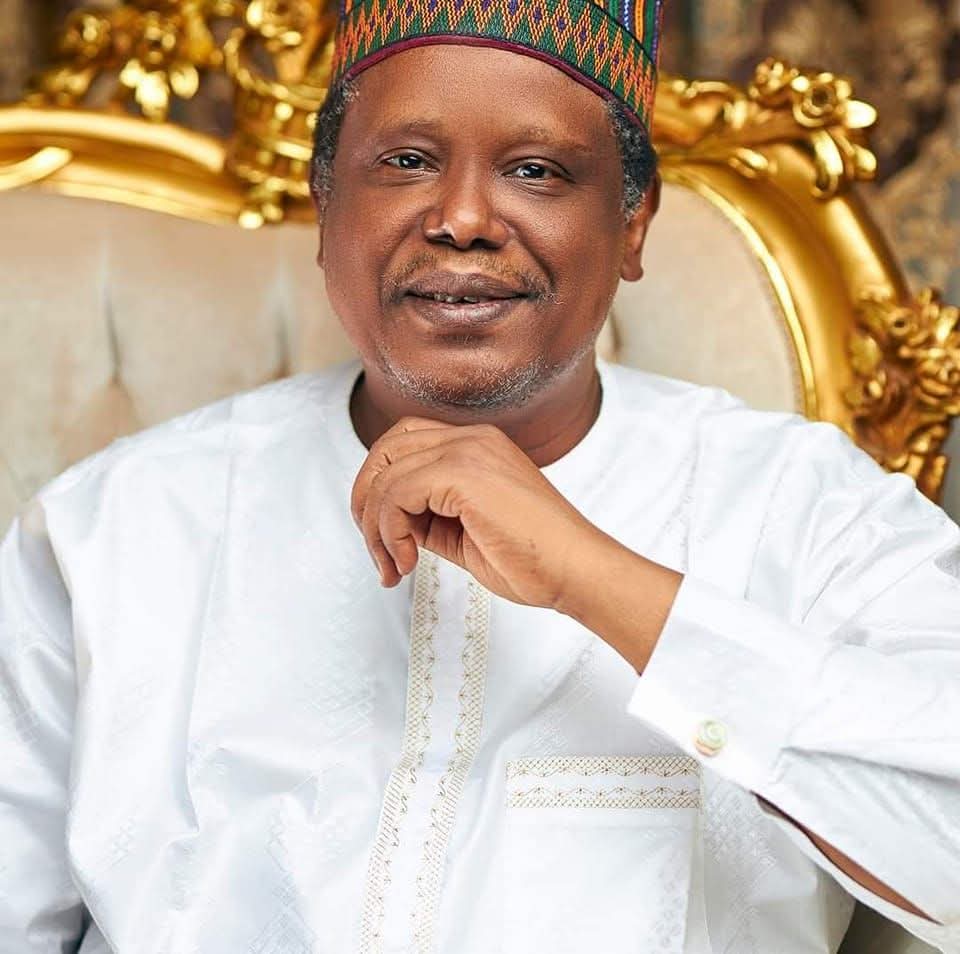

By Engr. Mohammed Nur Khalil
A Thought Exercise for Tinubu Administration on Diplomatic Defence and Economic Resilience.
Nigeria stands today at a difficult intersection of insecurity, economic distress, and heightened international attention. The recent remarks by the United States President, Donald Trump, alleging “Christian genocide” in Nigeria and hinting at military intervention, have stirred understandable national and global reactions. As Nigerians, we must respond with clarity, truth, historical perspective, and unwavering commitment to our unity and sovereignty.
Let it be stated clearly, Nigeria is a multi-religious nation, built on the coexistence of Muslims, Christians, and people of other beliefs. Our Constitution guarantees this pluralism, and most Nigerians, Muslims and Christians alike, desire only peace, dignity, and justice. As a Muslim, I am guided by the example of Prophet Muhammad (Peace be Upon Him), who lived and cooperated with Jews and Christians in mutual respect under the Charter of Madinah. Our history and faith traditions reject religious hatred.
To understand the present, we must recall how we arrived here. The wave of violent extremism that evolved into Boko Haram began in the late 2000s. After the extra-judicial killing of the group’s leader, Muhammadu Yusuf in 2009, the insurgency escalated into full-scale terror, targeting Muslims and Christians alike. Villages were destroyed, people displaced, mosques and churches bombed, without distinction. It was not and has never been a war between religions. It was a war against all Nigerians.
Successive governments employed varying strategies with mixed results. Under President Muhammadu Buhari, early gains were made against Boko Haram, but new threats emerged including banditry, kidnapping, rural terrorism, and organised criminal networks that preyed upon communities. While enormous sums were allocated to defence, with the security sector budget rising from ₦1.06 trillion in 2020 to over ₦3.25 trillion in 2024, the insecurity persisted. Accusations spread that corruption, institutional decay, and compromised priorities weakened the nation’s security response.
When President Bola Ahmed Tinubu assumed office in 2023, he inherited this deeply layered crisis. The administration has taken steps, but public confidence remains strained, as communities are compelled to negotiate with criminals, and citizens feel abandoned in their own homeland. Now, with international scrutiny intensified, Nigeria must respond wisely, not defensively, but with resolve, realism, and unity.
If I Were President Bola Ahmed Tinubu
At this delicate moment in our nation’s history, Nigeria stands at a crossroads of identity, unity, security, and sovereignty. This moment demands truth, courage, clarity, compassion, and leadership. If I were President Bola Ahmed Tinubu, my response to Nigeria and to the world would begin with the truth.
The Truth of Our Shared Pain
Nigeria’s insecurity did not begin today. It did not start with this administration, nor with the one before it. Its roots lie in decades of state fragility, economic decline, institutional decay, proliferation of illegal arms, demographic pressure, climate stress, and unhealed national wounds. The economic foundation of our security is crumbling; with inflation soaring above 18%, food inflation at 23%, and unemployment and underemployment affecting millions of youths, we have created a perfect incubator for crime and violence.
From Boko Haram in the Northeast, to banditry in the Northwest, to farmer-herder conflicts in the Middle Belt, to separatist tensions in the Southeast, it is the ordinary Nigerian who has paid the price, in lives, livelihoods, and peace of mind. Over 3.5 million Nigerians remain internally displaced, a stark testament to this shared pain.
Both Muslims and Christians Have Suffered
Mosques have been bombed. Churches have been burned. Imams have been killed in prayer. Pastors have been slain at the pulpit. Children have been abducted at Chibok and Dapchi in Borno State, Kankara in Katsina State, Kuriga in Kaduna State, and Kagara in Niger State. No faith community in Nigeria has been spared grief. The tears of Muslim mothers and Christian mothers fall the same. This is not a war of religion. It is a war against human dignity and the Nigerian people.
To the Nigerian People: We Must Reject Division
There are those who benefit from framing our national tragedy in the language of us versus them; those who weaponise grief for political advantage and turn pain into propaganda. They are dangerous. Nigeria’s peace will not come from choosing sides between Christians and Muslims. It will come when we choose the side of justice.
We must reject narratives designed to divide us. Neither Muslims nor Christians are enemies of the Nigerian state. Our real enemies are injustice, bad governance, corruption, and the criminal networks that profit from poverty and fear.
To overcome this crisis, we must heal our institutions, restore credibility to leadership, and rebuild trust between government and the governed.
To President Donald Trump: Nigeria Will Not Be Threatened Into Peace
If I were President Tinubu, I would respond to President Trump respectfully, but firmly. First, I would reaffirm to the world that Nigeria rejects all forms of violence, whether against Christians, Muslims, or any other group. We do not deny our security challenges; however, we reject external narratives that reduce a complex national crisis to a religious conflict. Terrorism and banditry in Nigeria are fundamentally economic, criminal, and political in nature, not religious.
Second, I would acknowledge openly that the pains of Nigerians are real. The losses experienced by Christian families are real. The losses experienced by Muslim families are real. But forcing a religious interpretation on Nigeria’s insecurity risks escalating the situation rather than resolving it. Nigeria welcomes support, dialogue, and global solidarity. Nigeria does not reject concern; we reject coercion. Nigeria does not reject partnership; we reject threats. Nigeria does not reject cooperation; we reject foreign boots on our soil. Our sovereignty must remain intact, and our diverse spiritual heritage must be respected.
Third, I would remind the world of the outcomes of foreign military interventions; Iraq is not safer. Libya is not stable. Syria is not healed. Afghanistan is not at peace. Peace cannot be imported. It must be built from within.
To Our Security Institutions: Reform Must Be Real
If I were President Tinubu, first, I would say to our defence and security leadership: Enough. Enough of budgets rising while communities fall. Enough of weapons disappearing while terrorists strengthen. Enough of condolence visits without accountability. Security sector reform is not optional. It is existential.
Second, I would undertake a firm and well-structured overhaul of our national defence architecture. Nigeria’s military includes some of the most experienced and capable officers in Africa, and the recent appointment of new Service Chiefs is a positive step. To build on this momentum, effective security strategy requires not just military excellence but the right strategic leadership and civilian oversight at the very top.
Therefore, I would appoint retired senior military professionals of proven integrity and operational excellence into crucial civilian roles, such as ministerial and key national advisory positions. These would be individuals who understand the terrain, the psychology of armed conflict, and the doctrine of modern asymmetric warfare. This is not a replacement of the serving military command; it is a strategic repositioning of our highest-level leadership to provide the experience-driven direction and governance that our brave men and women in uniform deserve.
Third, I would strengthen national intelligence capacity, restore functional and community-rooted policing, and end the era in which communities are forced to “protect themselves.” Security must return to being a public good, not a private negotiation.
Lastly, to the courageous members of our armed forces and intelligence services, men and women from every community and every faith, who stand in harm’s way to defend our nation, we offer profound respect. You serve shoulder-to-shoulder, guided not by tribe or creed, but by duty to Nigeria. Many have sacrificed comfort, safety, and even life itself in the effort to keep our country whole. Your courage is the backbone of our national defence, and the nation remains indebted to your service.
To Religious Leaders: Silence is No Longer Neutral
If I were President Tinubu, I would speak plainly to our religious leaders: in this moment of national peril, silence is not neutrality, it is complicity. To stand at the pulpit or the minbar speaking only of heaven, while our nation descends into turmoil, is a dereliction of divine duty. Nigeria does not need clerics who preside over congregations of the aggrieved; it needs clerics who heal rather than inflame, and who tend to a flock united in hope. Faith must not be wielded as a weapon; it must serve as a bridge.
Faith must be waged as a battle for the soul of our nation, not as a war against one another. Let us remember that Prophet Muhammad (Peace be Upon Him) did not merely coexist in Madinah; he established a covenant, the Charter of Madinah, with Jews and Christians, creating a united community bound by mutual rights and responsibilities. He built a nation from tribes. Likewise, Jesus Christ (Peace be Upon Him) confronted power with compassion, teaching us to turn the other cheek not as a sign of weakness, but as a revolutionary act of moral strength. He commanded us to love our neighbours and our enemies, for in that love lies the power to dismantle hatred.
This is the prophetic tradition Nigeria demands today. We need imams and pastors whose partnership is measured not in words but in deeds, who lead their congregations in acts of solidarity, not just in prayer, appearing as one unified front in moments of grief and celebration, jointly condemning violence without caveats, and teaching their followers that the blood of a Nigerian Christian and a Nigerian Muslim is equally sacred. Your platforms are not your own; they are a trust from God. Use them to extinguish the flames of division, for a faith that inflames is a faith betrayed.
To the International Community: Help Us Heal, Not Divide
To the international community, my message would be one of clarified partnership. Nigeria welcomes your concern, but we must redefine the terms of our engagement. We do not need interventions that simplify our complex crisis into a singular narrative or that treat our soil as a new theatre for geopolitical contests. We need allies in healing, not spectators to our suffering.
Therefore, as President, I would articulate a clear, actionable framework for international support, leveraging partnerships within ECOWAS and the African Union for greater regional diplomatic weight:
a) On Security: We call for joint, real-time intelligence-sharing that respects our sovereignty while crushing the terrorist cells that operate across borders. The flow of illicit arms that fuels the violence in the Sahel must be choked at its source through enhanced regional cooperation, not just with words, but with tracked, actionable agreements.
b) On Root Causes: We require partners in economic stabilization, investment in our rural economies to drain the swamp of despair where extremism breeds. Support for education and vocational training for our youth is a more potent weapon than any drone strike.
c) On Human Recovery: The wounds of this violence are not just physical. We need global expertise in trauma recovery and psychosocial support for our affected communities, helping to mend the minds and hearts broken by conflict.
d) On Dialogue: We propose the establishment of global interfaith dialogue platforms, led by moral authorities from all faiths, to counter the globalized ideology of hate with a unified theology of peace.
The principle is simple: Peace must be built with Nigeria, by Nigerians, for our unique context. It cannot be manufactured abroad and imposed upon us, nor can it be built against our sovereignty and dignity. Stand with us as partners in building a resilient, peaceful nation, not as judges who have already passed a verdict on our fate.
To Our Diplomatic Frontline: Presence Matters
If I were President Tinubu, I would recognise that foreign policy is not conducted on social media or through press statements, but through continuous diplomatic presence and strategic engagement. Since May 2023, Nigeria has operated without Ambassadors in Washington, Beijing, Brussels, London, Moscow, New Delhi, Brasília, and at several multilateral institutions, including the United Nations in New York. This has left Nigeria without the diplomatic machinery required to shape narratives, counter misinformation, and build international alliances that protect our national interests.
An Ambassador in the United States is not a ceremonial figure; they are the eyes, ears, and voice of Nigeria in the world’s most influential policy environment. An Ambassador to the United Nations ensures that Nigeria is not spoken for but speaks for itself. Without these key representatives, narratives about Nigeria are being formed without Nigeria in the room, and today’s crisis shows the consequence of that silence.
If I were President Tinubu, I would urgently appoint senior, respected, and strategically minded Ambassadors to these critical posts, individuals capable of credible engagement, relationship-building, and assertive diplomacy. National sovereignty is defended not only by soldiers at the border, but by diplomats at the table.
A National Renewal Agenda
If I were President Tinubu, having looked our challenges in the eye and spoken the hard truths to our people and the world, I would now turn from diagnosis to prescription. I would move from acknowledging our pain to activating our recovery. Therefore, I would immediately initiate a National Renewal Agenda, built not on empty promises, but on concrete, actionable pillars designed to secure our territory, heal our divides, and restore the covenant of trust between the government and the Nigerian people.
This agenda would be launched with the following five decisive actions, designed to be implemented in parallel for synergistic impact:
1. A National Commission for Healing, Reconciliation and Social Cohesion
Led jointly by respected Muslim and Christian Leaders, with a mandate to facilitate truth-telling, community dialogues, and a national narrative project to counter hate speech.
2. A Security Accountability and Transparency Framework
Every naira spent must be audited and accounted for. This will be achieved by mandating a special independent audit of all security expenditures since 2020, with findings published in a Citizens’ Summary.
3. An Emergency Taskforce to Reclaim Rural Territories
Farmers can safely return to their lands without fear. This will be a time-bound, military-civilian joint operation focused on securing key agrarian corridors to immediately boost food security and disrupt the economy of banditry.
4. A Regulated National Community Safety Corps
Local youth trained and supervised, not armed militias. This corps will be established under an Act of the National Assembly to ensure oversight, standardised training, and integration with formal security agencies.
5. A Presidential Covenant for Interfaith Harmony
Signed publicly by the Sultan of Sokoto, CAN President, JNI, Catholic Bishops, ECWA Leaders, and Traditional Rulers. This covenant will commit signatories to shared principles of respect, a rapid response system to counter inflammatory statements, and joint advocacy for peace.
Together, these five actions create a reinforcing cycle: security enables economic activity, accountability builds trust, and interfaith harmony secures the social peace necessary for lasting development. Nigeria must never be pushed into a war of identity, not by extremists, not by politicians, and not by foreign actors.
This Moment Is a Test of Our National Maturity
The world is watching. History is listening. God is witness. If we fail this moment, we may lose our future. But if we choose unity over division, justice over vengeance, truth over propaganda, and dignity over fear, then this painful moment may yet become the beginning of Nigeria’s rebirth. Nigeria is not a land of Christians against Muslims. Nigeria is a land of Nigerians, sharing one sky, one soil, and one destiny.
May God guide us all. May Nigeria rise in peace, and May Nigeria rise united.
Engr. Mohammed Nur Khalil is a seasoned engineering professional with a career spanning over four decades, Engr. Khalil has held numerous leadership positions, including Projects Engineer, Projects Director, and Principal Consultant. A registered engineer with COREN and member of ACEN, he has demonstrated expertise in project management, engineering consultancy, and public analysis. As a philanthropist and politician, Engr. Khalil is committed to contributing to nation-building, leveraging his vast experience to drive development in Nigeria and beyond. He wrote from Katsina.
\@mnk1962