
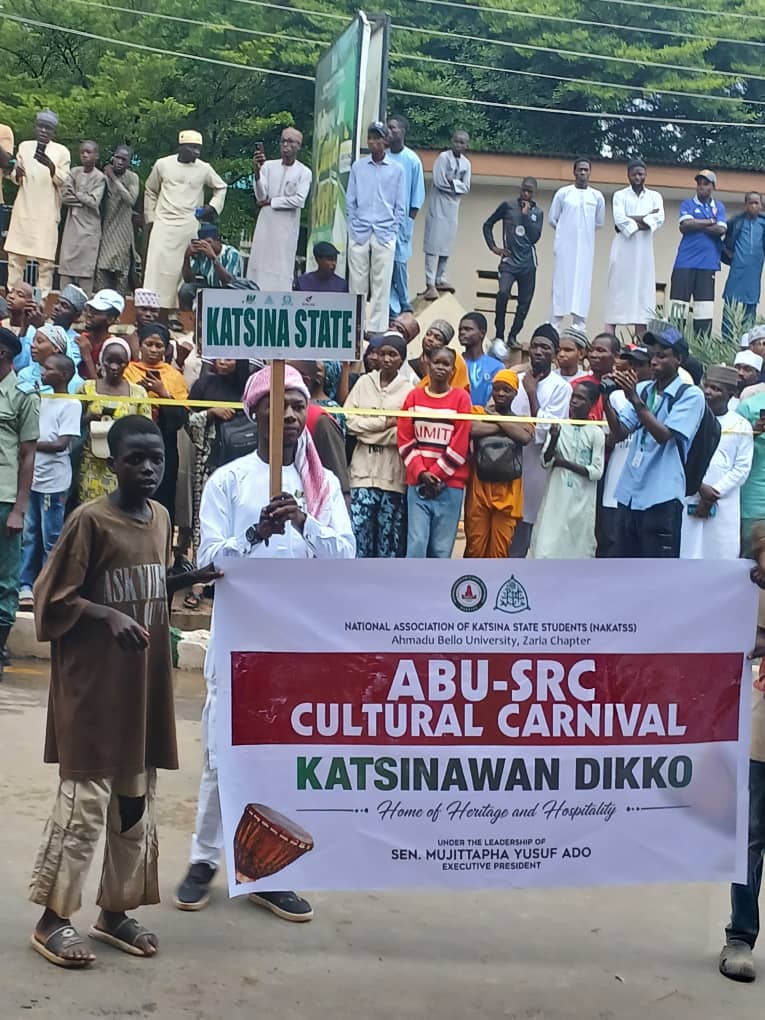

The Chairman of the Katsina State Heritage Restoration Committee, Dr. Mustapha Shehu, has led members of the committee to the Ahmadu Bello University (ABU), Zaria Carnival, as part of efforts to study cultural presentations and explore ways of strengthening the preservation and promotion of cultural heritage.
Speaking in an interview with correspondent Sada Salisu Rumah, who is also a member of the committee, Dr. Shehu explained that the committee was established by the Katsina State Government under Governor Dikko Umaru Radda to identify, revive and resuscitate the state’s cultural heritage and traditional values.
He said the committee’s mandate goes beyond preserving existing cultural practices, stressing the need to revive cultural heritage from Katsina and ensure that its values are passed on to younger generations.

According to him, the committee’s participation in the ABU Zaria Carnival also provides an opportunity to understudy the creativity of students in organising the event and examine how the carnival could be improved and enhanced to meet international standards.
Dr. Shehu said the objective was to see the carnival develop beyond an annual university event into a colourful cultural celebration capable of attracting global attention.
He noted that such an initiative could provide significant benefits, including promoting sustainable social peace and understanding among Nigeria’s diverse ethnic groups.
The Chairman also identified revenue generation as another potential benefit of developing cultural festivals to international standards, saying that properly promoted cultural heritage could become a sustainable source of economic opportunities.
The Katsina State Heritage Restoration Committee has developed a cultural heritage assessment framework for its participation in the ABU Zaria Carnival. The framework assesses cultural identity, accuracy of representation, traditional values, attire, music, dance, language, traditional practices, cultural integrity, educational value and the potential for continued annual presentation.
The assessment also seeks to determine whether the carnival possesses the cultural depth, integrity and institutional structure required to develop into a sustainable annual heritage event, while identifying practical ways of strengthening its cultural content, documentation, interpretation and community participation.
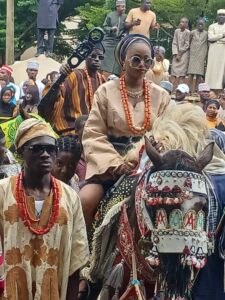
The committee’s broader objective, according to the assessment document, includes engaging UNESCO with a view to identifying and recognising the carnival as a unique cultural heritage initiative capable of attracting support for the sustainable development of the cultures represented and the university community.