


ABUJA — Katsina State’s monthly Internally Generated Revenue (IGR) has risen from ₦600 million in 2023 to more than ₦3 billion in 2026, Governor Dikko Umaru Radda has disclosed.
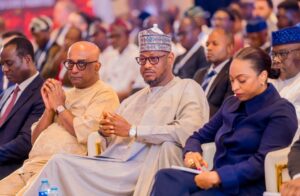
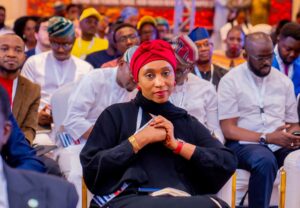
Radda announced this on Thursday while participating in a panel discussion at the launch of the World Bank’s Nigeria Development Update at the Sheraton Hotel, Abuja, themed “Beyond the Federal Purse: How Higher Revenues Reshaped State Priorities.”
The governor attributed the state’s increased revenue and development spending partly to improved Federation Account Allocation Committee (FAAC) allocations following President Bola Ahmed Tinubu’s economic reforms.
He said the additional resources had been channelled into healthcare, education, agriculture and other priority sectors.
In healthcare, Radda said the administration had reconstructed and equipped more than 270 primary healthcare centres, upgraded six comprehensive health centres to general hospitals and established ambulance, dialysis, imaging and cancer services. More than 2,000 healthcare professionals had also been recruited, he said.
In education, the governor said the state had built more than 170 schools, renovated over 500 others, established three model schools, recruited more than 10,000 teachers and trained over 25,000 teachers.
Radda said the state had also expanded agricultural mechanisation with more than 400 tractors and other equipment, while over 1,000 young people had received agribusiness training and funding. He added that the state distributed more than 60,000 tonnes of fertiliser annually and provided farmers with over 5,000 irrigation equipment items.
On fiscal management, Radda disclosed that Katsina’s domestic debt had declined from ₦62 billion in 2022 to ₦14 billion in 2025.
He further said the state’s malnutrition rate had fallen by seven per cent, while the number of out-of-school children had dropped from more than 500,000 to about 200,000.
The governor also said his administration had fully implemented financial autonomy for local governments.

The World Bank event brought together government officials and economic policy stakeholders, including the Minister of Finance and Coordinating Minister of the Economy, the Minister of Industry, Trade and Investment, the Special Adviser to the President on Energy, a Deputy Governor of the Central Bank of Nigeria responsible for Financial System Stability, Taiwo Oyedele, Lamido Yuguda and Nigerian Economic Summit Group Chief Executive Officer Tayo Aduloju.