
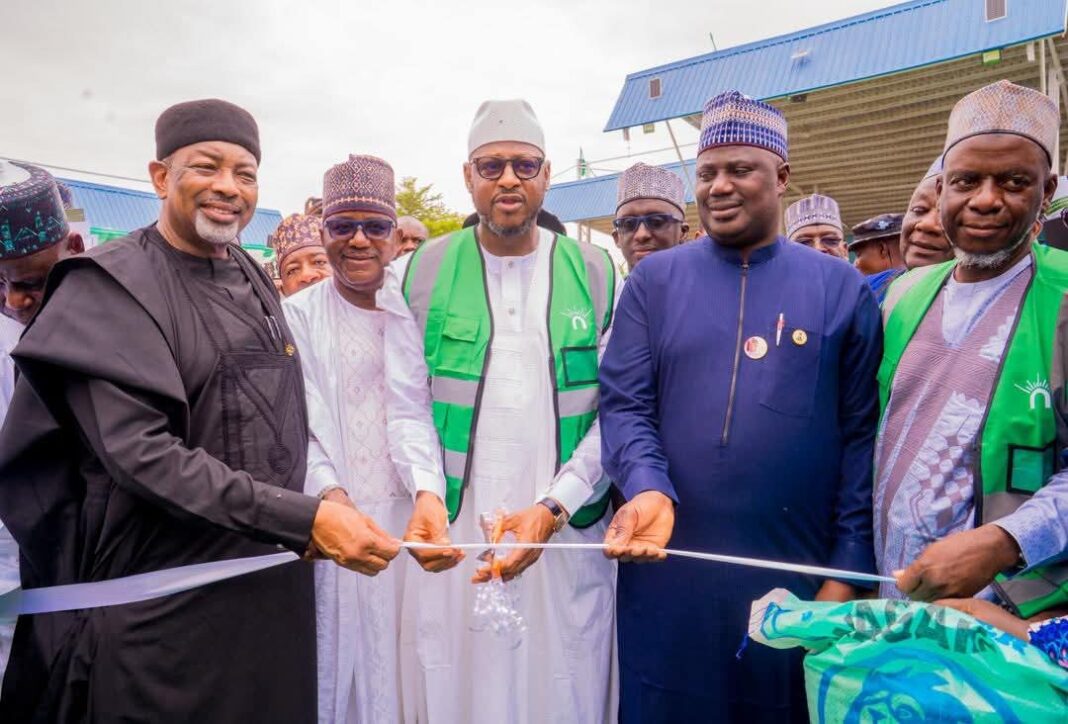

Governor Dikko Umaru Radda of Katsina State has warned against the diversion or manipulation of fertilizer distributed under the Federal Government’s Renewed Hope Farm Input Support Programme (FISP), declaring that only verified farmers should benefit from the intervention.
Speaking at the North-West flag-off of the distribution of 100,800 bags of fertilizer to 25,200 smallholder farmers, Radda said the state and implementing agencies had put in place strict monitoring mechanisms to ensure transparency and accountability.
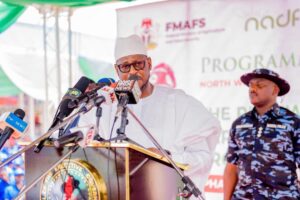
Katsina Governor, Dikko Umaru Radda
“We will not tolerate diversion or manipulation. These inputs must reach the intended farmers,” the governor said.
The programme, implemented by the National Agricultural Development Fund (NADF), is part of President Bola Ahmed Tinubu’s Renewed Hope Agenda aimed at boosting food security across the country.
Radda disclosed that Katsina State would receive 20,160 bags of fertilizer for distribution to 5,040 verified smallholder farmers, adding that the intervention comes at a critical period of the farming season and is expected to improve crop yields, raise rural incomes and strengthen national food security.
He described the initiative as more than an input distribution exercise, saying it is a deliberate strategy to improve agricultural productivity, strengthen food systems and support millions of smallholder farmers.
The governor noted that the North-West remains Nigeria’s agricultural hub and called for sustained investment in mechanisation, irrigation, quality farm inputs and market-driven policies to unlock the region’s full agricultural potential.
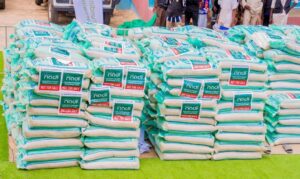
He also highlighted Katsina State’s own agricultural interventions, including the annual distribution of over 400,000 bags of subsidised fertilizer, as well as the provision of solar-powered irrigation pumps, power tillers and other modern farming equipment.
According to him, all the fertilizer supplied under the programme is locally produced, fully subsidised, traceable and clearly marked “Not for Sale” to prevent diversion.
Radda added that the initiative would not only improve agricultural productivity but also strengthen local fertilizer production, create jobs and stimulate economic growth.
He called for greater collaboration among the Federal Government, NADF, development partners and state governments to sustain investments in agriculture.
Earlier, Jigawa State Governor Umar Namadi, represented by his deputy, Aminu Usman, described the programme as a timely intervention that would boost agricultural productivity across the North-West.
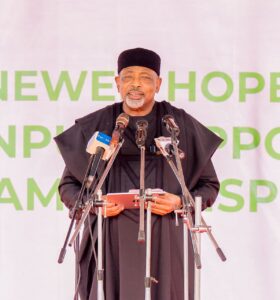
Jigawa State Deputy Governor, Aminu Usman
He said Jigawa State also received 20,160 bags of fertilizer for 5,040 farmers, stressing that agriculture remains the backbone of the region’s economy.
Executive Secretary and Chief Executive Officer of NADF, Mohammed A. Ibrahim, said the programme was designed to ensure efficiency, accountability and measurable impact through farmer verification and input tracking systems.
He said the intervention covers five North-West states and prioritises crops including maize, sorghum, rice, cowpea and tomato based on the needs of each state.
According to Ibrahim, Nigeria’s fertilizer production capacity has grown from four blending plants in 2016 to more than 90 by 2025, underscoring the country’s expanding capacity to support domestic agriculture.
Katsina State Commissioner for Agriculture, Lawal Aliyu Shargalle, commended the Federal Government and NADF for the initiative, describing it as a significant boost to Governor Radda’s ongoing investments in irrigation, mechanisation and farmer empowerment.
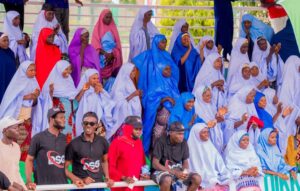
The flag-off ceremony was attended by the Minister of Livestock Development, Idi Mukhtar Maiha; the Minister of Agriculture and Food Security, Senator Abba Kyari; the Minister of State for Agriculture and Food Security, Senator Aliyu Sabi Abdullahi; the Minister of Housing and Urban Development, Engr. Muttaqa Rabe Darma; Deputy Governor Faruk Lawal Jobe; Speaker of the Katsina State House of Assembly, Nasir Yahaya Daura; members of the National and State Assemblies, and other government officials and stakeholders.