
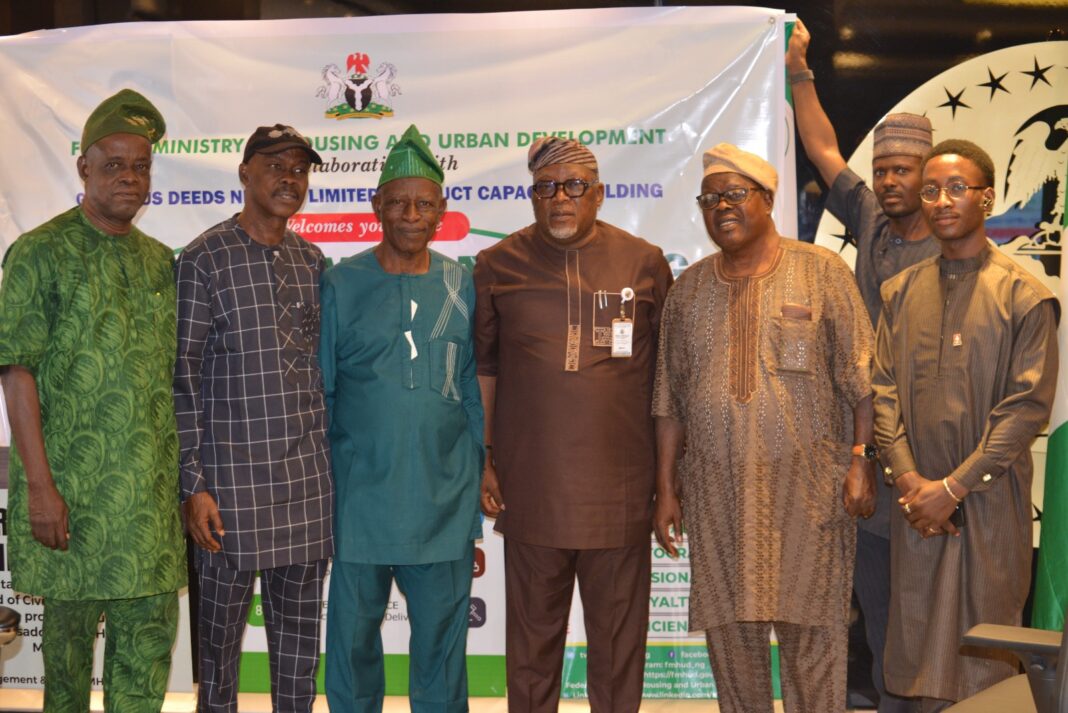

The Federal Ministry of Housing and Urban Development has organised a two-day pre-retirement training for its officers nearing the end of their service, aimed at equipping them with practical skills for life after public service.
Speaking at the opening of the training in Abuja, the Permanent Secretary of the ministry, Shuaib Belgore, described retirement as a redirection of experience into new and meaningful ventures rather than a withdrawal from productivity.
Belgore, who was represented by the Director of Human Resource Management, Ademola Ayodele, said the programme was designed to help retiring officers transition smoothly into retirement by providing knowledge and practical guidance on key aspects of post-service life.
He described the training as an important milestone marking not only the end of a career in public service but also the beginning of a new phase filled with opportunities, growth and renewed purpose.
The permanent secretary commended the retiring officers for their years of commitment and contributions to the ministry, noting that their service had helped shape policies, projects and programmes that impact communities across Nigeria.
He urged participants to take full advantage of the training sessions by engaging facilitators, asking questions and sharing experiences.
In his welcome address, the Director of Human Resource Management, Ademola Ayodele, said the training would cover critical areas including financial planning, health and wellness, psychological readiness and entrepreneurship.
According to him, the programme was specifically designed to prepare participants for the realities of retirement and help them plan for a productive and stable post-service life.
The training featured several presentations by facilitators who provided practical insights into retirement planning and personal development.
One of the facilitators, Fashina Kayode, in a presentation titled “Perspectives in Retirement,” urged participants to identify and develop their innate skills as a foundation for financial stability after leaving service.
He outlined four pillars for a successful retirement: financial security, health and wellness, purpose and engagement, and social connection. He noted that many retirees face challenges such as financial uncertainty, health concerns, social isolation and difficulty adjusting to a less structured lifestyle.
Another facilitator, Francis Olorunfemi, spoke on “Retirement in the Public Service: The Uncertainties, the Fears and the Need for Future Plans.” He said uncertainty is a natural part of retirement and advised participants to develop resilience and adaptability.
Olorunfemi also encouraged retirees to venture into businesses they understand and can personally supervise, warning that lack of oversight often leads to financial losses.
On health and wellness, medical facilitator Adeose P. J. advised participants to maintain regular medical check-ups, adopt daily exercise routines and make adequate financial preparations for health-related challenges.
He also emphasised the importance of mental well-being, recommending hobbies, continuous learning, volunteering and social engagement as ways to maintain psychological health in retirement.
Also speaking, the Director of Finance and Accounts in the ministry, Peter Osondu, called for reforms within the civil service, particularly improvements in remuneration packages.
He noted that while retirement training is important, broader structural reforms are necessary to strengthen the financial security of public servants after leaving active service.