

By Nasir Danladi Bako, Ph.D., OON, Kogunan Sokoto
“Leaders must act in the best interest of the populace, maintain accessibility for the oppressed and lose legitimacy if they fail to establish justice.”
— Shehu Usman Danfodiyo (1754–1817)
There is, at first glance, something paradoxical about describing a soldier as a soldier of peace. Soldiering evokes images of war, combat and the use of force; peace-making, on the other hand, suggests dialogue, reconciliation, restraint and the resolution of conflict without violence.
Yet, in the person of His Eminence, Sultan Muhammad Sa’ad Abubakar III, these seemingly opposing ideas have found an extraordinary convergence.
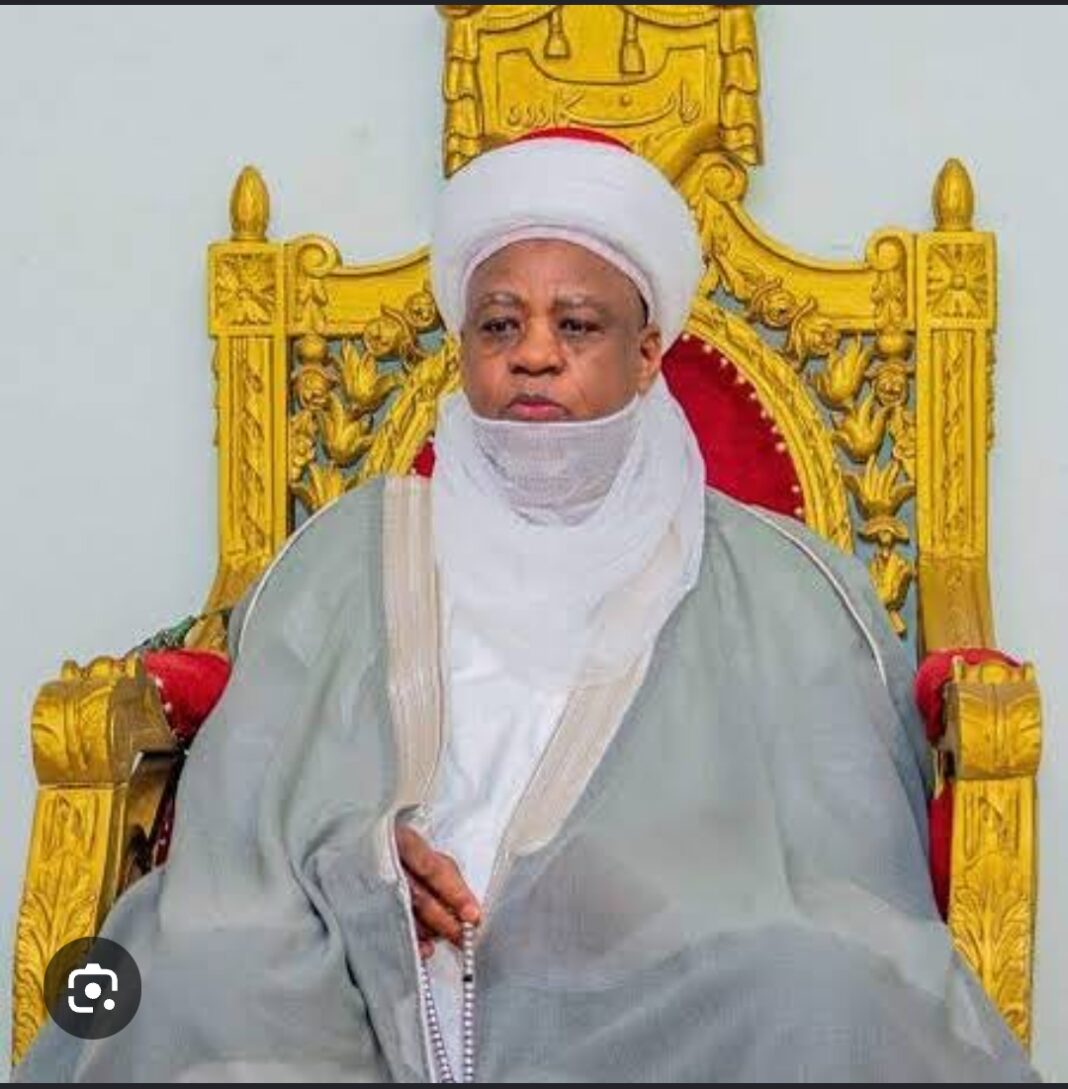
As the 20th Sultan of Sokoto turns 70 today, August 24, 2026, perhaps one of the most remarkable things about his life is that he spent a significant part of it preparing for war, only to devote the greater part of his reign to preaching, pursuing and defending peace.
It is a journey that demonstrates that the experience of war can sometimes produce the strongest advocates for peace.
When power is entrusted to a leader — particularly one who occupies a throne as historically significant as that of the Sultan of Sokoto — the fundamental question is not merely how much power he possesses, but how wisely he deploys it for the benefit of the people.
As Michel Foucault observed, “Power is not just held by governments and kings; it flows through everyday social interactions.” The real test of leadership, therefore, is not the possession of power but its responsible utilisation.
Sultan Sa’ad Abubakar has, in my view, passed that test remarkably well.
A Soldier Prepared for the Throne
Sultan Sa’ad was appointed the 20th Sultan of Sokoto in November 2006, at the age of 50. By then, he had accumulated an extraordinary range of experiences that would later prove invaluable in navigating the responsibilities of the Sultanate.
His journey had begun in Sokoto, where he attended Sultan Ward Primary School in the 1960s alongside Kabir Tafida and Rilwanu Bello. He subsequently proceeded to Barewa College, Zaria, in the 1970s, where he studied alongside Ahmed Mora and others.
He later joined Course 18 of the Nigerian Defence Academy, Kaduna, alongside personalities such as Bala Shagari and General Abdulrahman Dambazau. Upon completion of his military training, he was commissioned as a Second Lieutenant.
His subsequent military postings took him to virtually every geopolitical region of Nigeria — Nnewi and Nsukka in the South-East, the South-South, Saki in the South-West, Ilorin in the North-Central, and Bauchi and Baga in the North-East.
In retrospect, it is difficult not to see these experiences as part of a larger preparation for national leadership.
Even more significant was his service in the Armoured Corps, one of the most demanding and combat-oriented components of the Nigerian Army.
He would later serve in the ECOMOG operations in Liberia and Sierra Leone in the 1990s. There, he experienced firsthand the devastation that armed conflict inflicts on societies and individuals.
Those experiences left an indelible impression on him.
He once put it succinctly:
“I have seen the devastating effects of war, and it is my conviction that we must do everything possible as a nation to avoid war. Peace is always the best option.”
That statement perhaps captures the essence of Sultan Sa’ad’s philosophy better than any elaborate description could.
From the Battlefield to the Peace Table
The irony is profound.
A man trained to command soldiers eventually became one of Nigeria’s most persistent advocates for peaceful coexistence.
His military career taught him the realities of conflict. His upbringing as a prince and son of the late Sultan Abubakar III exposed him from an early age to the complexities of power, authority and traditional leadership. And his subsequent intellectual preparation equipped him with yet another important dimension of leadership.
In preparation for the possibility of becoming Sultan, fate took him to the National Institute for Policy and Strategic Studies (NIPSS), Kuru, Jos, where peace-building, national integration and conflict resolution form important components of the curriculum.
His own dissertation focused on conflict and peace resolution.
It was as if life had been deliberately assembling the pieces of a puzzle.
The soldier learned the cost of war.
The prince learned the responsibilities of power.
The student of national strategy learned the mechanisms of conflict resolution.
And the Sultan ultimately became a soldier of peace.
Taking the Message of Peace to the World
Since ascending the throne, Sultan Sa’ad has carried the message of peace far beyond the boundaries of the Sokoto Caliphate.
At Harvard University in Boston, Massachusetts, in 2010, he spoke on Islam, Peace and Democracy in West Africa, making the compelling case that Islam and democracy can coexist harmoniously in Africa.
At the United States Department of State in Washington, D.C., he engaged American military and policy leaders on Islam, peace and the responsibility of religious leadership.
At Chatham House in London, he reiterated his message of peaceful coexistence before an audience of intellectuals, policymakers and international observers.
He also carried the same message to Clarence House, where he met the then Prince Charles, and to the Council on Foreign Relations and the Wilson Center in Washington.
His engagements with Columbia University and the United States Institute of Peace further reinforced his role as an advocate for dialogue and peaceful coexistence.
His peace advocacy has also taken him to Oxford and, as Co-President of Religions for Peace, to international gatherings such as the Global Assembly in Istanbul, Turkey.
At home, perhaps nowhere is his commitment to peace more visible than in his leadership of the Nigerian Inter-Religious Council (NIREC).
A Sultan Who Understands Religious Tolerance
Sultan Sa’ad’s commitment to peace is not merely rhetorical.
It is reflected in his personal interactions with adherents of other faiths.
He has consistently demonstrated that being a firm defender of Islam does not require hostility towards those who practise other religions.
On one occasion, a Christian delegation visited him at the Palace and requested permission to pray according to Christian tradition.
He granted their request.
That simple gesture speaks volumes.
It demonstrates a profound understanding of the difference between conviction and intolerance — between standing firmly for one’s faith and denying another person the right to practise theirs.
Indeed, this is where another profound teaching of Shehu Usman Danfodiyo becomes relevant. The Shehu warned against placing an unfit person in a position of national leadership, observing that the death of a thousand good men is less tragic than entrusting leadership to an unfit person.
Leadership is ultimately a trust.
And the Sultan has approached that trust with an understanding of the enormous responsibility attached to the throne.
The Meaning of 70
At 70, Sultan Muhammad Sa’ad Abubakar III represents a fascinating convergence of tradition and modernity, military discipline and religious scholarship, authority and accessibility, strength and restraint.
He inherited a throne founded on a tradition of scholarship, justice and service. He inherited, too, the enormous expectations associated with the Sokoto Caliphate — an institution whose influence has extended far beyond the geographical boundaries of Sokoto.
Yet he has interpreted his responsibility in a manner suited to the realities of contemporary Nigeria.
He has remained accessible.
He has spoken to governments and ordinary citizens.
He has engaged Muslims and Christians.
He has addressed soldiers, academics, traditional rulers, diplomats and international policymakers.
And, above all, he has continued to insist that peace is not weakness.
Rather, peace is the highest expression of strength when it is pursued from a position of wisdom, courage and conviction.
A National Treasure
As Sultan Sa’ad clocks 70 today, his legacy is already visible.
It is visible in the countless interventions he has made in the cause of peace.
It is visible in his efforts to promote religious understanding.
It is visible in his advocacy for national unity and peaceful coexistence.
It is visible in the respect he commands across religious, ethnic, political and regional divides.
For a man who spent his formative years learning how to fight wars, it is perhaps the greatest irony — and the greatest achievement — that he has devoted his years on the throne to teaching people how to avoid them.
That is why I call him a Soldier of Peace.
His military uniform may have been exchanged for the flowing robes of a Sultan, but the discipline of the soldier remains. The battlefield has merely changed.
Today, his weapons are dialogue, wisdom, tolerance, persuasion and reconciliation.
And his battlefield is the struggle for peace in Nigeria and beyond.
At 70, His Eminence, Sultan Muhammad Sa’ad Abubakar III, remains not merely the spiritual leader of millions, but a national institution and a treasure whose service transcends the boundaries of the Sokoto Caliphate.
May Almighty Allah grant His Eminence many more years in good health, wisdom and strength, and continue to guide him in the service of Islam, the Sultanate, Nigeria and humanity.
Happy 70th Birthday, Your Eminence.
Long may the Soldier of Peace reign.
— Nasir Danladi Bako, Ph.D., OON
Kogunan Sokoto