

Katsina State recorded an 81.66 per cent revenue performance in the 2025 fiscal year, generating ₦565.28 billion out of a revised budget of ₦692.24 billion, with ₦343 billion invested in capital projects across key sectors.
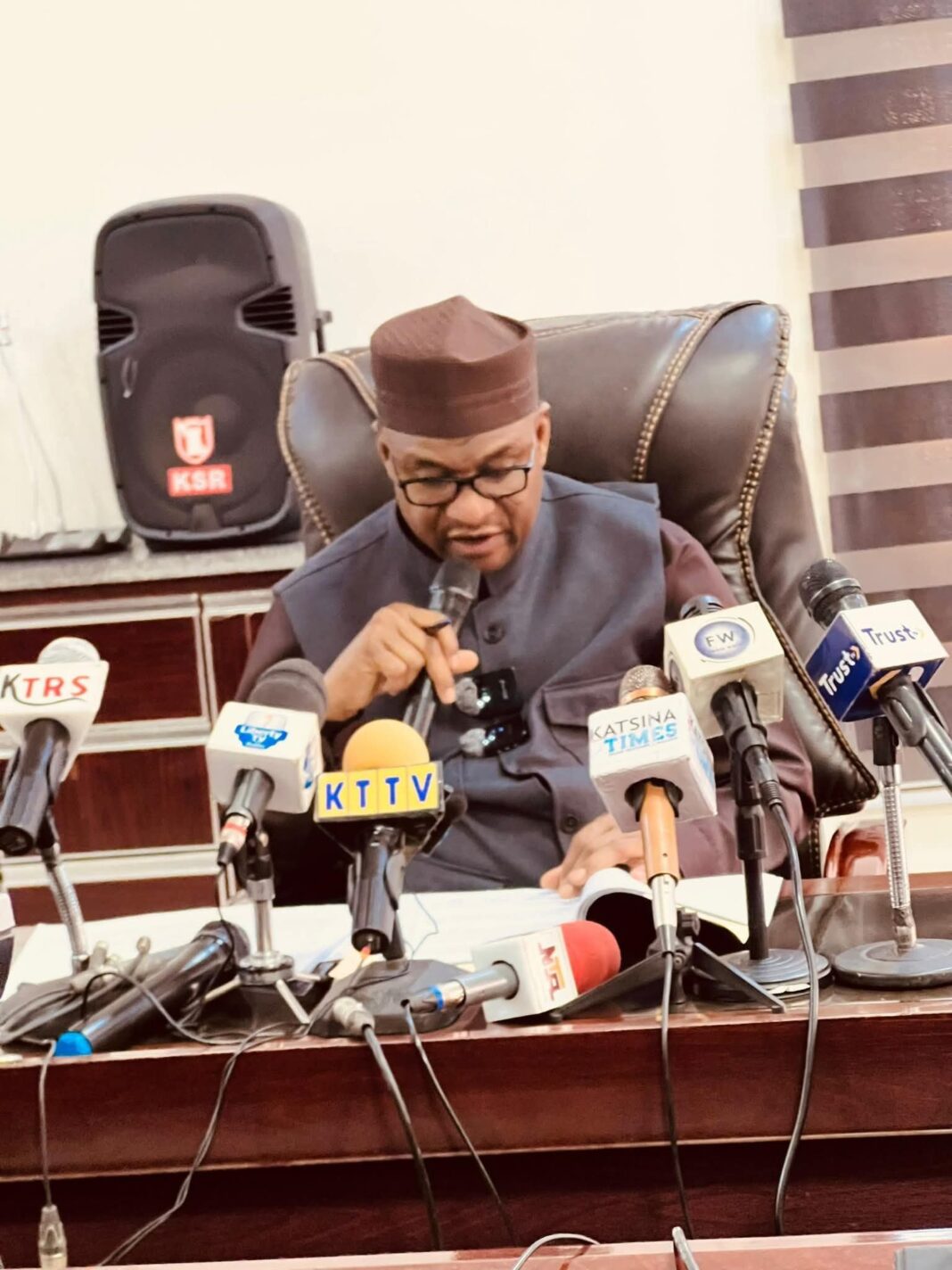
The Commissioner for Budget and Economic Planning, Alhaji Malik Anas, disclosed this on Thursday while presenting the 2025 Budget Performance Report at Government House, Katsina.
He said the state’s total expenditure for the year stood at ₦482.41 billion, representing 69.69 per cent budget performance. Of the amount spent, ₦343 billion went into capital projects covering infrastructure, education, health, agriculture and other social sectors.
According to him, recurrent expenditure recorded 88.56 per cent performance, with personnel costs achieving 93.47 per cent and overhead costs reaching 84.82 per cent. Capital expenditure performance stood at 64.11 per cent, which he said underscored the administration’s focus on infrastructure development despite revenue constraints.
A breakdown of sectoral allocations showed that the economic sector received 47 per cent of total expenditure, the social sector 37 per cent, the administrative sector 16 per cent, and law and justice one per cent.
Anas also unveiled the ₦857 billion 2026 budget proposal — the largest in the state’s history — anchored on Governor Dikko Umaru Radda’s “Building Your Future” agenda.
He said the 2026 budget is structured around five strategic pillars: security and sustainable peace, economic empowerment and job creation, human capital development, sustainable infrastructure, and agriculture with environmental resilience.
Under security, ₦1.2 billion is earmarked for critical security assets, ₦500 million for ammunition and cartridges, ₦9 billion for the Security Escrow Account, and ₦100 million for grazing facilities in Rugu Forest to promote peaceful coexistence between farmers and herders.
For economic empowerment, ₦10 billion is allocated for Micro, Small and Medium Enterprises support, ₦3.33 billion for the Graduate Entrepreneurship Programme, ₦10 billion for the Social Investment Programme, and ₦7.68 billion for palliatives.
In the education sector, ₦28 billion is set aside under the TESS programme for school infrastructure, ₦17.5 billion for new secondary schools, ₦15 billion for AGILE projects, ₦13.6 billion for primary school construction, and ₦6.1 billion for scholarships and examination subsidies.
The health sector will receive ₦5 billion for Emergency Medical Services, ₦5 billion for upgrading primary health centres, ₦3 billion for the Imaging Centre at GARSH Katsina, and ₦20.5 billion for hospital renovation.
Infrastructure projects include ₦15 billion for urban renewal roads, ₦12.21 billion for the completion of the Kunduru-Kadanya Road, ₦12 billion for the Daura Western Bypass, ₦15 billion for new housing estates, and ₦5 billion for the completion of the supply of 30 hybrid buses.
In agriculture, ₦20 billion is earmarked for subsidised fertiliser, ₦4.5 billion for mechanisation, ₦2.38 billion for irrigation across the 361 wards, ₦17.5 billion for a livestock and meat processing centre, and ₦10 billion for pastoralist programmes.
The power and energy sector is allocated ₦10 billion for renewable energy generation, ₦3.33 billion for rural electrification, and ₦1 billion for solar street lighting.
Environmental resilience efforts will receive ₦28.04 billion for ACReSAL projects, ₦6.3 billion for flood and erosion control, and ₦3 billion for the Compressed Natural Gas initiative.
The commissioner said the 2026 budget framework demonstrates the administration’s resolve to translate development plans into concrete projects aimed at reshaping communities and improving living standards across the state.