
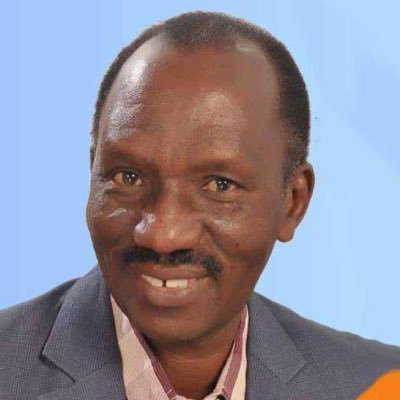

By Aliyu U. Tilde
International understanding of religious violence in Nigeria is heavily shaped by narratives circulated online—narratives that many observers argue are influenced by biased terminology used to describe victims and perpetrators. A simple Internet search for “Muslims killed in Nigeria” yields sparse results, while queries on “Christian killings” or “Christian genocide” produce abundant material. This discrepancy raises important questions about how conflict is framed and remembered.
Same Crime, Different Labels
It is not that Muslims are not victims of violence—whether at the hands of fellow Muslims or Christians. For at least two decades before Boko Haram and banditry surged, large-scale killings of Muslims occurred repeatedly, especially in North-Central Nigeria. Such attacks have persisted even after 2009. Yet, because they are poorly indexed online, they receive minimal international attention.
A key part of this, Tilde argues, lies in terminology.
When Christians are victims, their religious identity is often foregrounded in headlines—even when the conflict may not be religious in nature. Terms like “Christian communities attacked” quickly emerge, reinforcing a perception of targeted persecution.
By contrast, when Muslim victims are involved, they are frequently described using generic terms such as “villagers,” “locals,” “worshippers,” or “civilians.” For instance, the 25 schoolgirls recently abducted in Kebbi State were widely labelled “schoolchildren,” with no reference to their religious background. This dilutes the visibility of Muslim suffering in digital records.
Similarly, when attackers are Muslims, they are readily categorized as “Islamists,” “jihadists,” “Fulani militants,” or “terrorists.” But when Christian-affiliated groups carry out attacks, they are more often described as “youths,” “tribal militias,” “unknown gunmen,” or “mobs,” with no religious identifiers.
The result, Tilde argues, is the global perception of a one-sided reality: Christians as perpetual victims and Muslims as the primary aggressors—an image he describes as inconsistent with historical data and lived experience.
Forgotten Massacres of Muslims
Tilde highlights several major incidents over the past four decades that involved large-scale killings of Muslims but remain underrepresented in global discussions:
- Kasuwan Magani (1981): Considered a major early religious crisis, beginning with a night attack on Muslim residents.
- Kafanchan crises (1987, 1999): Multiple waves of violence with significant Muslim casualties.
- Zangon Kataf (1992): Led to convictions of Christian leaders and a retired general.
- Recurring Tafawa Balewa conflicts (1991–2001): Culminated in the near-total displacement of its historic Muslim population.
- Plateau crises (2001–2012): Over 40 Muslim settlements reportedly destroyed.
- Yelwa massacre (2004): Deemed severe enough for the federal government to impose emergency rule.
- Southern Kaduna (2011): Over 1,200 Muslims killed in several towns, including Zonkwa and Matsirga.
- Wukari crises (2013–2014): Mass killings attributed to local militias.
- Taraba/Jalingo/Ardo Kola (2012–2017): Multiple communities displaced or destroyed.
- Mambilla Plateau (2017): Hundreds of Fulani Muslim herders killed.
- Numan (2017): Significant casualties among Fulani Muslims following attacks by local militias.
These events are often described in media reports using terms like “ethnic clashes,” “reprisal attacks,” or “intercommunity violence,” language Tilde argues sanitizes or obscures the religious dimensions applied more readily in reverse situations.
Why the Bias?
Several factors shape this disparity, according to Tilde:
1. Media and institutional leanings:
Western institutions and large segments of Nigeria’s media landscape are culturally Christian, potentially influencing the framing of violence.
2. NGO ecosystem:
Many international advocacy groups focused on persecution—such as evangelical networks and faith-based human rights organisations—tend to highlight Christian suffering. Their reports often feed into global media and legislative briefings, thereby reinforcing a particular narrative.
3. Political incentives:
Various local and foreign actors may have reasons to amplify claims of Christian persecution, whether for funding, diplomatic leverage, or political support.
4. Misidentification of victims:
Tilde notes instances where Muslim victims have been presented as Christians in foreign commentaries, including recent debates surrounding the religion of abducted schoolgirls in Kebbi State. The school later confirmed that all the abducted girls are Muslim.
5. Differences in public response:
According to the author, Muslims tend to express their grievances quietly and move on, while Christian groups and advocacy networks sustain complaints longer, helping their narratives gain traction online.
The Dangers of a One-Sided Narrative
The cumulative effect, Tilde argues, is the presentation of an incomplete and misleading picture: one in which Christian communities appear under constant existential threat while Muslim suffering becomes marginalized or invisible. This imbalance has implications for policymaking, international intervention, and public perception.
Towards a More Balanced Vocabulary
Tilde concludes that addressing this imbalance requires more consistent terminology across all conflict reporting in Nigeria. He urges Muslim communities to adopt similar naming conventions used by Christian groups—explicitly identifying the religious identities of victims and perpetrators where relevant—so their experiences are accurately documented and recognized.
A more balanced lexicon, he argues, would not only improve global understanding of Nigeria’s complex conflicts but also ensure that victims of all backgrounds receive attention, empathy, and justice.
20 November 2025
—