
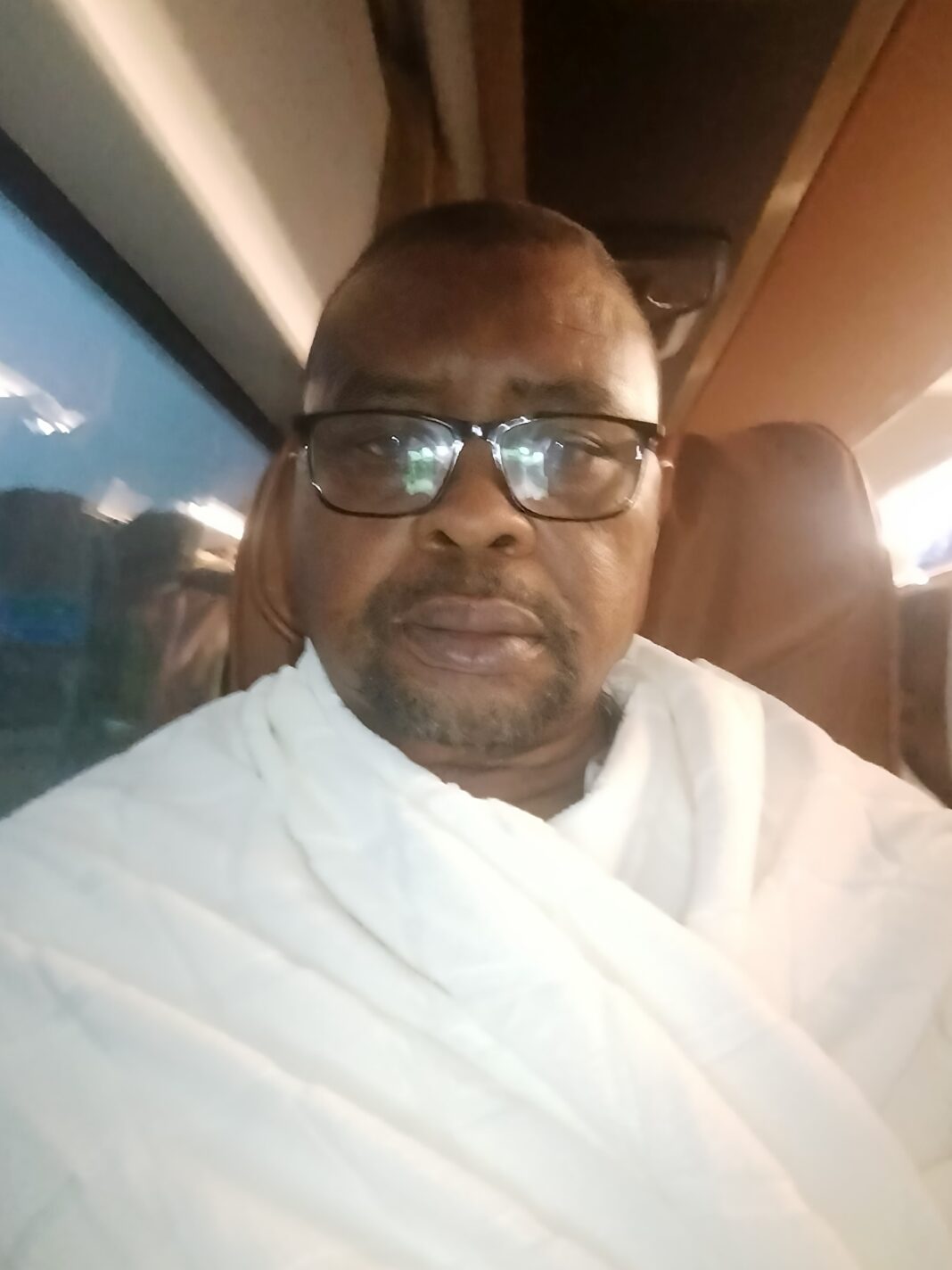

For every pilgrim, there comes a moment when the spiritual calm of Madinah slowly gives way to the demanding reality of Hajj itself. For us, that moment arrived the instant our buses departed the blessed city of the Holy Prophet Muhammad (SAW) and headed toward Makkah.
Our contingent is the final batch from Katsina State for the 2026 Hajj exercise. It comprises pilgrims from Malumfashi, Kafur and Kankara Local Government Areas, alongside officials of the Katsina State Hajj Delegation led by the Amirul Hajj, Barrister Ahmad Usman El-Marzuq, members of the Katsina State Pilgrims Welfare Board, and management staff of the Board.
We had spent three spiritually fulfilling days in Madinah with little or no complaints regarding accommodation and feeding. The proximity to Masjid Nabawi, the serenity of the city, and the constant atmosphere of worship had given pilgrims an opportunity to prepare themselves mentally and spiritually for what lay ahead.
But Hajj is not merely a journey of comfort.
It is a journey of sacrifice, endurance, patience and complete submission to Allah.
That reality unfolded fully during the more than 400-kilometre journey from Madinah to Makkah — a trip that eventually took us nearly seven hours.
Before entering the sacred boundaries of Makkah, pilgrims are required to stop at the Miqat — the designated point where every pilgrim intending to perform Hajj or Umrah must enter the sacred state of Ihram.
At the Miqat, pilgrims performed ablution while many also took bath in accordance with the Sunnah, symbolizing physical and spiritual purification before presenting themselves before Allah in one of Islam’s greatest acts of worship.
Men changed into the simple white unstitched garments of Ihram while women dressed modestly according to Islamic injunctions. In that sacred state, all worldly distinctions disappear. Wealth, power, social status and nationality no longer matter. Everyone stands equal before Allah.
It was there that pilgrims formally made their intention and began reciting the Talbiyah:
“Labbayka Allahumma Labbayk…”
“Here I am, O Allah, here I am…”
The chanting echoed through the buses in deeply emotional tones as pilgrims reflected on the enormity of the spiritual journey ahead.
Before departure from Madinah, however, a few incidents nearly delayed our movement.
Several pilgrims from our bus — each bus carrying a maximum of 45 passengers — decided to remain behind in Madinah for additional days before proceeding later to Makkah by train. Another pilgrim who had not originally travelled with us from Jeddah to Madinah also sought to join our bus to Makkah.
But Saudi Hajj authorities maintain an extremely strict manifest system. No pilgrim can be added or removed without prior approval. Every passenger is carefully checked and accounted for before departure.
Eventually, all issues were resolved amicably and the journey continued smoothly.
Throughout the trip, the Director of Planning, Research and Statistics at the Katsina State Pilgrims Welfare Board, Malam Aminu Yammawa, alongside the assigned preacher, Malam Abdulwahid Sabi’u Rafindadi, carefully guided pilgrims on the rituals expected of them upon arrival in Makkah.
One deeply touching story shared during the journey reminded many pilgrims of both the hardships and mercies associated with Hajj.
Among us was a pilgrim who had attempted Hajj two years ago but unfortunately missed one of the essential rites after the bus conveying pilgrims reportedly departed without him despite efforts to locate him. Missing that ritual invalidated his Hajj.
For many ordinary pilgrims, that would have meant the loss of a lifelong dream after years of sacrifice and savings.
But upon learning about his ordeal, the Governor of Katsina State, Malam Dikko Umaru Radda, reportedly sponsored him entirely for this year’s Hajj so he could fulfill the sacred obligation once again.
The story quietly moved many pilgrims to emotion.
As the buses approached Makkah around Magrib time after the exhausting seven-hour journey, another reality of modern Hajj became visible.
By then, every pilgrim was almost wrapped in layers of identification. Around our necks hung three separate tags like protective talismans. One identified us officially as members of the Katsina State Hajj Delegation. Another was the all-important Nusuk card issued by Saudi authorities for access to holy sites. The third tag carried details of our accommodation in case anyone became lost in the overwhelming crowds of pilgrims arriving from all parts of the world.
As if that was not enough, we were also given identification wristbands.
The modern Hajj pilgrim now moves with an entire identity system attached to his body — a reflection both of the enormous organization behind today’s pilgrimage and the sheer scale of the gathering.
Immediately after arriving at our accommodation, pilgrims barely had time to rest.
We dropped our luggage, took quick baths in accordance with the Sunnah, and prepared to head for the Ka’aba to perform Umrah, which is required for pilgrims observing Hajj Tamattu’.
Our accommodation was approximately 2.6 kilometres from Masjid al-Haram.
Despite the exhaustion of the seven-hour journey, many of us chose to walk. Even taxis could only drop pilgrims far away because of heavy congestion around the Haram area.
So we walked.
And with every step toward the Ka’aba, fatigue gradually gave way to spiritual anticipation.
For many pilgrims, no matter how many times they may have seen photographs or videos of the Ka’aba, the first sight of it remains overwhelming beyond words.
After performing Magrib and Isha prayers, we began the Tawaf — the circumambulation of the Ka’aba seven times.
The ritual itself is physically demanding. Depending on the crowd and the distance from the Ka’aba itself, each circuit can cover several hundred meters. Completing all seven rounds can easily amount to between three and five kilometres of continuous walking amidst dense human movement.
Yet pilgrims continue steadily, reciting prayers, supplications and verses of the Qur’an while moving around the ancient House built by Prophet Ibrahim (AS).
But Tawaf was only the beginning.
Immediately afterward came Sa’i — the walking between the hills of Safa and Marwa seven times in remembrance of Hajara, the wife of Prophet Ibrahim (AS), who desperately searched for water for her infant son Isma’il.
The modern Sa’i corridor now stretches approximately 450 meters one way. Completing the seven rounds means covering well over three kilometres on foot.
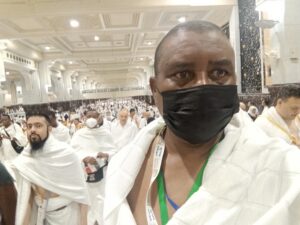
By the time we completed both Tawaf and Sa’i, exhaustion had completely overtaken our bodies.
Our legs felt like jelly.
Personally, I found myself wobbling as though my legs had suddenly become rubber.
Yet beneath the physical exhaustion was a strange inner peace — the kind that perhaps only pilgrims truly understand.
Because at that moment, one realizes that Hajj is not meant to be easy.
It is meant to humble the body, test the soul, and remind mankind that true worship often comes with sacrifice, endurance and total surrender to Allah.